Size:
± Medium
Type:
± Elemental
Form:
Temper:
# App:
Lair:
Diet:
Combat Dice:
± 0
Hit Points:
± 105 (14d8 + 42)
Attack Rank:
± 0
Passive Defense:
± 0
Active Defense:
Damage Reduction:
± 0
Role:
Ground:
Climb/Arboreal:
Flight:
Swim:
Benthic:
Burrow:
Ethereal:
 Actions/Abilities/Traits: D&D 5e
 Actions/Abilities/Traits: D&D 5e
Special
Heat Aura
At the start of each of the cinder knight's turns, each creature within 5 feet of it takes 7 (2d6) fire damage. A creature that touches the cinder knight or hits it with a melee attack while within 5 feet of it takes 7 (2d6) fire damage.
Special
Illumination
The cinder knight sheds dim light in a 15-foot radius.
Special
Water Susceptibility
For every 5 feet the cinder knight moves in water, or for every gallon of water splashed on it, it takes 1 cold damage.
Action
Greatsword
Melee Weapon Attack: +8 to hit, reach 5 ft., one target. Hit: 11 (2d6 + 4) slashing damage plus 14 (4d6) fire damage. If the target is a creature or a flammable object, it ignites. Until a creature takes an action to douse the fire, the target takes 5 (1d10) fire damage at the start of each of its turns.
Action
Multiattack
The cinder knight makes two melee attacks.
Action
Slam
Melee Weapon Attack: +8 to hit, reach 5 ft., one target. Hit: 8 (1d8 + 4) bludgeoning damage plus 14 (4d6) fire damage. If the target is a creature or a flammable object, it ignites. Until a creature takes an action to douse the fire, the target takes 5 (1d10) fire damage at the start of each of its turns.
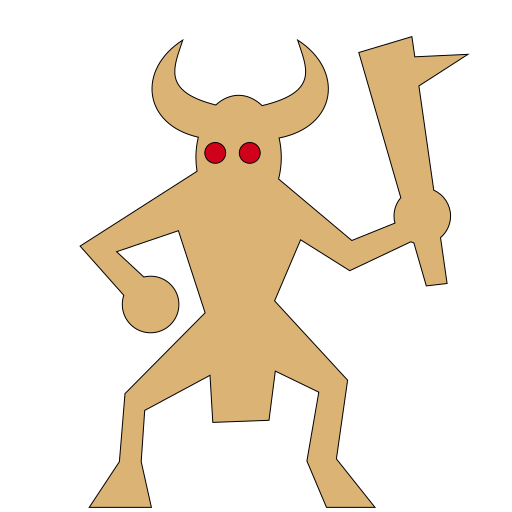
This intimidating figure stands unmoving, an immense sword clutched in its hands. Wisps of smoke rise from its blackened armor.
Cinder knights are elemental creatures composed completely of fire and encased in suits of irremovable armor. Over time, the armor adheres to the cinder knight's form, and the armor chars and blackens as the flames of the cinder knight's body scorch and burns it. Cinder knights dwell on the Plane of Fire among other fire elementals and creatures. The creature's true origins are unknown, but some believe the cinder knight to be an advanced form of fire elemental or perhaps a fire elemental punished for some transgression.
A cinder knight stands over 6 feet tall and weighs 200 pounds (without its armor, its true form weighs less). The creature's true form is never seen, for when a cinder knight dies, its fires extinguish, and it vanishes in wisps of smoke, leaving only its armor behind. The armor is extremely hot to the touch and deals 1d6 fire damage to any creature touching it. One hour after a cinder knight dies, the armor, while still warm, can be handled without taking damage.
A cinder knight rarely attacks using natural attacks, preferring the use of weapons in combat. Greatswords are the most common weapon, followed by mauls, longswords, and flails. Regardless of the weapon used, a cinder knight deals fire damage with its fire attack (a product of the creature itself and not the weapon).
5e SRD
Actions/Abilities/Traits: D&D 5e
This intimidating figure stands unmoving, an immense sword clutched in its hands. Wisps of smoke rise from its blackened armor.
Cinder knights are elemental creatures composed completely of fire and encased in suits of irremovable armor. Over time, the armor adheres to the cinder knight's form, and the armor chars and blackens as the flames of the cinder knight's body scorch and burns it. Cinder knights dwell on the Plane of Fire among other fire elementals and creatures. The creature's true origins are unknown, but some believe the cinder knight to be an advanced form of fire elemental or perhaps a fire elemental punished for some transgression.
A cinder knight stands over 6 feet tall and weighs 200 pounds (without its armor, its true form weighs less). The creature's true form is never seen, for when a cinder knight dies, its fires extinguish, and it vanishes in wisps of smoke, leaving only its armor behind. The armor is extremely hot to the touch and deals 1d6 fire damage to any creature touching it. One hour after a cinder knight dies, the armor, while still warm, can be handled without taking damage.
A cinder knight rarely attacks using natural attacks, preferring the use of weapons in combat. Greatswords are the most common weapon, followed by mauls, longswords, and flails. Regardless of the weapon used, a cinder knight deals fire damage with its fire attack (a product of the creature itself and not the weapon).
5e SRD















 (1)
(1)

 (1)
(1)