













To Draw Creatures From:



 Actions/Abilities/Traits: Basic Fantasy
Actions/Abilities/Traits: Basic Fantasy
Actions/Abilities/Traits: Basic Fantasy
Barrel-chested giants with ruddy skin, black hair, and dark red eyes
Despite their great size, fire giants have a Dwarf-like appearance, being barrel-chested with thick arms and legs; average males stand 14 feet tall and weigh around 3,200 pounds, while females average 13 feet tall and around 3,000 pounds. Their skin is ruddy, their hair is black, and their eyes are a very dark red that is almost black (and looks that color in poor lighting). Fire giants are unfriendly to almost all other humanoid races, though they sometimes subjugate those living nearby to act as their servants. In combat they favor heavy plate steel armor (the first AC given above) made of steel blackened by quenching in oil. They arm themselves with massive weapons made of the same material. A fire giant can throw large stones up to 200' for 3d6 points of damage. Fire giants are immune to all fire-based attacks.
Actions/Abilities/Traits: Basic Fantasy
Actions/Abilities/Traits: D&D 5e
Actions/Abilities/Traits: D&D 5e
This lumbering giant has short stumpy legs and powerful, muscular arms. Its hair and beard seem to be made of fire.
Master crafters and organized warriors, fire giants dwell among volcanoes, lava floes, and rocky mountains. They are ruthless militaristic brutes whose mastery of metalwork is legendary.
Fire Forged
Fire giant fortresses are built around and inside volcanoes or near magma-filled caverns. The blistering heat of their homes fuels the fire giants' forges, and causes the iron of their fortress walls to glow a comforting orange. In lands far removed from volcanic heat, fire giants mine coal to burn. Traditional smithies occupy places of honor in their demesnes, and the giants' stony fortresses constantly belch plumes of sooty smoke. In more remote outposts, fire giants burn wood to keep their forge fires lit, deforesting leagues of land in all directions.
Fire giants shun cold as much as their cousins the frost giants hate heat. They can adapt to cold environments with effort, though, keeping their hearth fires burning bright and wearing heavy woolen clothing and furs to stay warm.
Martial Experts
From birth, a fire giant is taught to embrace a legacy of war. At the cradle, its parents chant songs of battle. As children, fire giants play at war, hurling igneous rocks at one another across the banks of magma rivers. In later years, formal martial training becomes an integral part of life in the giants' fortresses and underground realms of smoke and ash.
The fire giants' songs are odes of battles lost and won, while their dances are martial formations of pounding feet that resound like smiths' hammers throughout their smoky halls.
Just as fire giants pass down their knowledge of crafting from generation to generation, their renowned fighting prowess comes not from wild fury but from endless discipline and training. Enemies make the mistake of underestimating fire giants based on their brutish manner, learning too late that these giants live for combat and can be shrewd tacticians.
Feudal Lords
Humanoids conquered in war become serfs to the fire giants. The serfs work the farms and fields on the outskirts of fire giant halls and fortresses, raising livestock and harvesting fields whose bounty is almost entirely tithed to the fire giant kings.
Fire giant crafters work through insight and experience rather than writing or arithmetic. Though most fire giants place little worth on such frivolousness, they sometimes keep slaves at court who are versed in such skills. Serfs not destined for court or the fields (especially dwarves) are taken to the fire giants' mountainous realms to mine ore and gemstones from deep within the earth.
Fire giants low in the ordning manage the mine tunnels and the slaves that toil there, few of which survive the difficult and dangerous work for long. Though fire giants are skilled in the engineering of mine tunnels and the gathering of ore, they place less importance on the safety of their slaves than on smelting and working the bounty those slaves produce.
Skilled Artisans
Fire giants have a fearsome reputation as soldiers and conquerors, and for their ability to burn, plunder, and destroy. Yet among the giants, fire giants produce the greatest crafters and artists. They excel at smelting and smith work, as they do at the engineering of metal and stone, and the quality of their artistry shows even in their implements of destruction and their weapons of war.
Fire giants strive to build the strongest fortresses and most potent siege weapons. They experiment with alloys to create the hardest armor, then forge the swords that can pierce it. Such work requires brawn and brains in equal measure, and fire giants high in the ordning tend to be the smartest and strongest of their kind.
Fire Giant
Giant of the Smoldering Depths
Fire giants inhabit the hollow vaults and molten rivers of mountainous depths. There, they use subterranean heat and riches to craft wonders, from titanic weapons of war to delicate works of art.
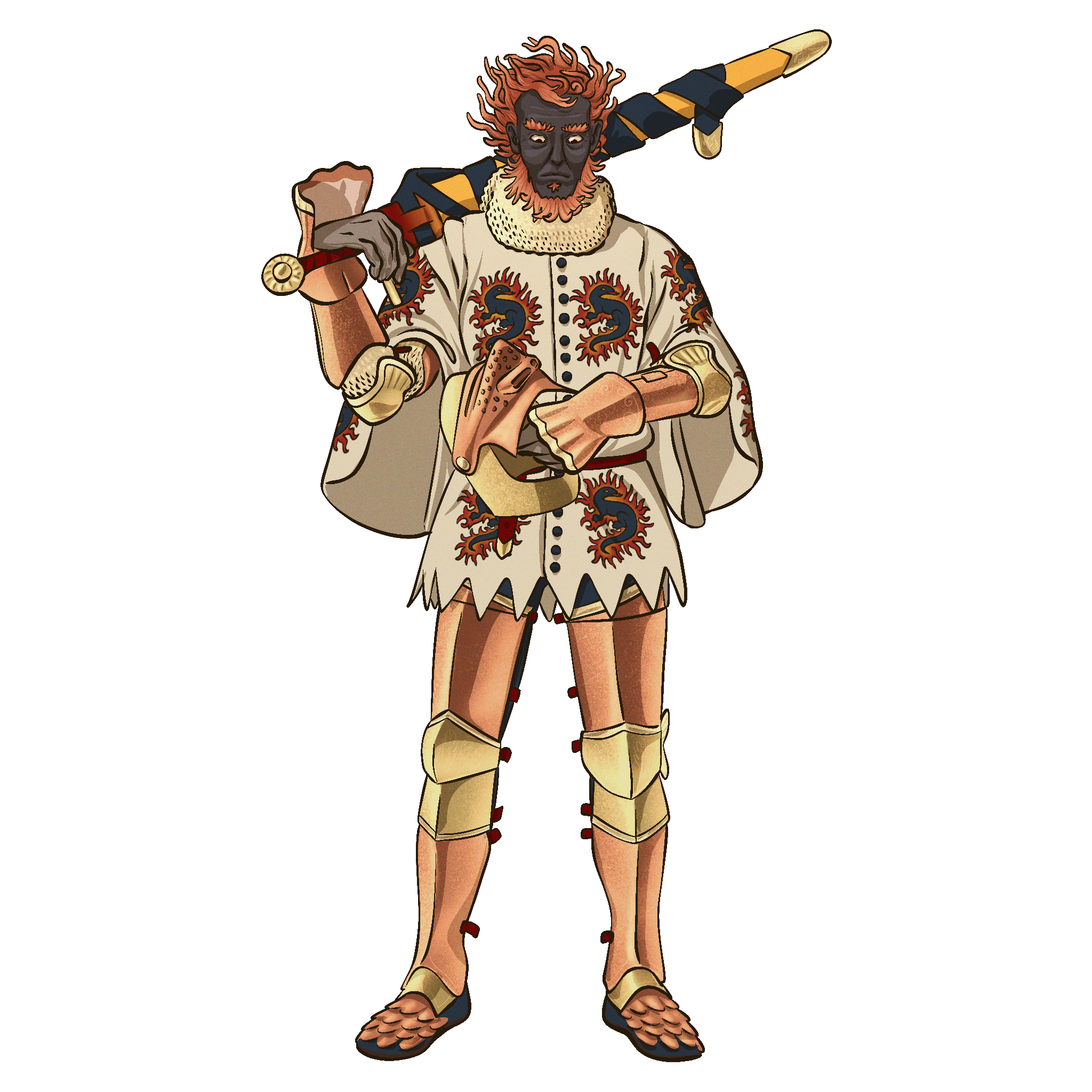
Fire giants have broad frames, skin tones in a variety of rocklike shades, and hair like flame.
Most fire giants dwell in volcanically active mountains or cavernous depths that house their fortress-forges. Evil fire giants tend to be martially minded, and they craft mighty arms to conquer their neighbors and seize valuable resources. More temperate fire giants trade their works for what they need, and they might share the ancient techniques of Giant artisans with other craftspeople. In either case, fire giants are prone to undertaking ambitious designs, and they rarely appreciate interruptions in their titanic workshops.
Actions/Abilities/Traits: D&D 5e
Actions/Abilities/Traits: D&D 5e (Fire Giant Dreadnought)
Actions/Abilities/Traits: D&D 5e (Fire Giant Dreadnought)
When I first saw a fire giant dreadnought, I doubted the giant could even move. I quickly learned my error.
Most fire giants value not just strength but also skill at forgecraft. The foundry is the heart of any fire giant community. It is a temple, school, proving ground, and political hub rolled into one.
Those whose primary virtue is brawn are usually consigned to the lowliest of tasks, such as working forge bellows or moving coal. However, the strongest among these can excel at and gain rank through a specialized role: the dreadnought.
Dreadnoughts are massively powerful fire giants who wield two huge shields like plow blades. These shields bear spikes on their exterior and have hollow interiors into which the dreadnought pours hot coals at the first sign of danger. Armed with these two shields, the dreadnought can present a fiery wall to any attacker. When the dreadnought has finished, often all that is left of a foe is a smoking smear on the floor.
When not called on to fight, dreadnoughts maintain their strength by using their shields to shove huge quantities of coal, stone, or ore about the foundry. Occasionally, dreadnoughts are called on by their superiors to accompany a war or diplomatic delegation and use their fierce and intimidating demeanor to strengthen the delegation's position.
The ordning for fire giants emphasizes not just strength but also skill at forgecraft. The foundry is the heart of any fire giant community. It is temple, school, proving ground, and political hub rolled into one.
Those who have brawn but little brain are usually consigned to the lowliest of tasks such as working forge bellows or moving coal. However, there is one role at which the strongest among them can excel and gain rank: the dreadnought.
Weapons of War
Dreadnoughts are massively powerful fire giants who wield two huge shields like plow blades. These shields bear spikes on their exterior and have hollow interiors into which the dreadnought pours hot coals at the first sign of danger. Armed with its two shields, the dreadnought can present a fiery wall to any attacker. When the dreadnought has finished, often all that is left of a foe is a smoking smear on the floor.
When not called on to fight, dreadnoughts maintain their strength by using their shields to shove huge quantities of coal, stone, or ore about the foundry. Occasionally, dreadnoughts are called on by their superiors to accompany a war or diplomatic delegation, The presence of the dreadnoughts presents a fierce face in either case.
Actions/Abilities/Traits: D&D 5e (Fire Giant Dreadnought)
Actions/Abilities/Traits: D&D 5e (Fire Giant Forgecaller)
Actions/Abilities/Traits: D&D 5e (Fire Giant Forgecaller)
A fire giant who masters traditional rune magic can control the heat of a volcanic environment and conjure raw elemental energy of fire and magma. In a fire giant community, these forgecallers oversee both forges and the community's defense, often in Surtur's name. Some forgecallers prefer to live and work in isolation, seeking the hottest fires in volcanoes' hearts or the Elemental Plane of Fire to pursue their own crafts and studies.
A forgecaller is a walking furnace, clad head to toe in plate armor that seems to barely contain intense heat and billowing smoke. They conjure waves of magma and can fly by jetting magical fire from their legs and body.
Actions/Abilities/Traits: D&D 5e (Fire Giant Forgecaller)
Actions/Abilities/Traits: D&D 5e (Fire Giant of Evil Fire)
Actions/Abilities/Traits: D&D 5e (Fire Giant of Evil Fire)
A fire giant is born around flame, works with flame, and lives among flames, but a fire giant who gazes into flames too deeply may see the Prince of Evil Fire, Imix, gazing back. Giants who fall to Imix's corruption might leave their homes to join with like-minded cultists, but others remain within their communities to pursue Imix's destructive agenda.
A fire giant of Evil Fire forges a set of armor and weapons in flames blessed by Imix. The giant can then call on these magical flames to strike the foes of the Eternal Flame. The armor forged in these flames welds to the flesh, so while the giant isn't burned, the armor can't be removed once donned. When the giant dies, the armor explodes as a final gift from the All-Consuming Fire.
Actions/Abilities/Traits: D&D 5e (Fire Giant of Evil Fire)
Actions/Abilities/Traits: OSRIC
Actions/Abilities/Traits: OSRIC
Barrel-chested giants with ruddy skin, black hair, and dark red eyes
Like cloud giants, fire giants often live in castles (50%), but are just as likely to frequent caves. It is not uncommon for many male fire giants to live together. When more than four fire giants are encountered, half the additional individuals will be female. When more than six fire giants are encountered, the additional individuals will be immature and will only have a percentage of adult capabilities. Females are not as formidable as males, and are comparable to frost giants in terms of attack damage and hit point capacity. As their name suggests, all fire giants are unharmed by fire. This extends to the flame breath produced by red dragons. Like most giants, fire giants delight in throwing rocks at enemies. They can hit a target from a distance of 10-ft to 120-ft (2d10 hit points of damage), and can similarly catch (50% chance) thrown rocks. When not throwing rocks, fire giants wield large swords. Fire giants sometimes share their lairs with hell hounds. Description: Fire giants' hair is the red and orange colour of flames, and their skin is soot black. Their teeth are flame orange, and their eyes red. The commonly wear armour on their broad, 6-ft wide shoulders. This armou
Actions/Abilities/Traits: OSRIC


mountain, montane forest
rare

mountain, montane shrubland
rare

mountain, cave
rare


This lumbering giant has short stumpy legs and powerful, muscular arms. Its hair and beard seem to be made of fire.
Master crafters and organized warriors, fire giants dwell among volcanoes, lava floes, and rocky mountains. They are ruthless militaristic brutes whose mastery of metalwork is legendary.
Fire Forged
Fire giant fortresses are built around and inside volcanoes or near magma-filled caverns. The blistering heat of their homes fuels the fire giants' forges, and causes the iron of their fortress walls to glow a comforting orange. In lands far removed from volcanic heat, fire giants mine coal to burn. Traditional smithies occupy places of honor in their demesnes, and the giants' stony fortresses constantly belch plumes of sooty smoke. In more remote outposts, fire giants burn wood to keep their forge fires lit, deforesting leagues of land in all directions.
Fire giants shun cold as much as their cousins the frost giants hate heat. They can adapt to cold environments with effort, though, keeping their hearth fires burning bright and wearing heavy woolen clothing and furs to stay warm.
Martial Experts
From birth, a fire giant is taught to embrace a legacy of war. At the cradle, its parents chant songs of battle. As children, fire giants play at war, hurling igneous rocks at one another across the banks of magma rivers. In later years, formal martial training becomes an integral part of life in the giants' fortresses and underground realms of smoke and ash.
The fire giants' songs are odes of battles lost and won, while their dances are martial formations of pounding feet that resound like smiths' hammers throughout their smoky halls.
Just as fire giants pass down their knowledge of crafting from generation to generation, their renowned fighting prowess comes not from wild fury but from endless discipline and training. Enemies make the mistake of underestimating fire giants based on their brutish manner, learning too late that these giants live for combat and can be shrewd tacticians.
Feudal Lords
Humanoids conquered in war become serfs to the fire giants. The serfs work the farms and fields on the outskirts of fire giant halls and fortresses, raising livestock and harvesting fields whose bounty is almost entirely tithed to the fire giant kings.
Fire giant crafters work through insight and experience rather than writing or arithmetic. Though most fire giants place little worth on such frivolousness, they sometimes keep slaves at court who are versed in such skills. Serfs not destined for court or the fields (especially dwarves) are taken to the fire giants' mountainous realms to mine ore and gemstones from deep within the earth.
Fire giants low in the ordning manage the mine tunnels and the slaves that toil there, few of which survive the difficult and dangerous work for long. Though fire giants are skilled in the engineering of mine tunnels and the gathering of ore, they place less importance on the safety of their slaves than on smelting and working the bounty those slaves produce.
Skilled Artisans
Fire giants have a fearsome reputation as soldiers and conquerors, and for their ability to burn, plunder, and destroy. Yet among the giants, fire giants produce the greatest crafters and artists. They excel at smelting and smith work, as they do at the engineering of metal and stone, and the quality of their artistry shows even in their implements of destruction and their weapons of war.
Fire giants strive to build the strongest fortresses and most potent siege weapons. They experiment with alloys to create the hardest armor, then forge the swords that can pierce it. Such work requires brawn and brains in equal measure, and fire giants high in the ordning tend to be the smartest and strongest of their kind.
Fire Giant
Giant of the Smoldering Depths
Fire giants inhabit the hollow vaults and molten rivers of mountainous depths. There, they use subterranean heat and riches to craft wonders, from titanic weapons of war to delicate works of art.
Fire giants have broad frames, skin tones in a variety of rocklike shades, and hair like flame.
Most fire giants dwell in volcanically active mountains or cavernous depths that house their fortress-forges. Evil fire giants tend to be martially minded, and they craft mighty arms to conquer their neighbors and seize valuable resources. More temperate fire giants trade their works for what they need, and they might share the ancient techniques of Giant artisans with other craftspeople. In either case, fire giants are prone to undertaking ambitious designs, and they rarely appreciate interruptions in their titanic workshops.
Barrel-chested giants with ruddy skin, black hair, and dark red eyes
Despite their great size, fire giants have a Dwarf-like appearance, being barrel-chested with thick arms and legs; average males stand 14 feet tall and weigh around 3,200 pounds, while females average 13 feet tall and around 3,000 pounds. Their skin is ruddy, their hair is black, and their eyes are a very dark red that is almost black (and looks that color in poor lighting). Fire giants are unfriendly to almost all other humanoid races, though they sometimes subjugate those living nearby to act as their servants. In combat they favor heavy plate steel armor (the first AC given above) made of steel blackened by quenching in oil. They arm themselves with massive weapons made of the same material. A fire giant can throw large stones up to 200' for 3d6 points of damage. Fire giants are immune to all fire-based attacks.
Contents
Barrel-chested giants with ruddy skin, black hair, and dark red eyes
Like cloud giants, fire giants often live in castles (50%), but are just as likely to frequent caves. It is not uncommon for many male fire giants to live together. When more than four fire giants are encountered, half the additional individuals will be female. When more than six fire giants are encountered, the additional individuals will be immature and will only have a percentage of adult capabilities. Females are not as formidable as males, and are comparable to frost giants in terms of attack damage and hit point capacity. As their name suggests, all fire giants are unharmed by fire. This extends to the flame breath produced by red dragons. Like most giants, fire giants delight in throwing rocks at enemies. They can hit a target from a distance of 10-ft to 120-ft (2d10 hit points of damage), and can similarly catch (50% chance) thrown rocks. When not throwing rocks, fire giants wield large swords. Fire giants sometimes share their lairs with hell hounds. Description: Fire giants' hair is the red and orange colour of flames, and their skin is soot black. Their teeth are flame orange, and their eyes red. The commonly wear armour on their broad, 6-ft wide shoulders. This armou

Illustrated Bestiary
 (16)
(16)


 (18)
(18)
The Monsters & Creatures Compendium Any
The Monsters Know What They're Doing Dungeons And Dragons
Monstrosities Swords & Wizardry
Angry Golem D&D 5e
Pathfinder 1e Bestiary 1 Pathfinder
Pathfinder 2e Bestiary 1 Pathfinder
Monster Codex Pathfinder
Giants Revisited Pathfinder
Mythic Adventures Pathfinder
Monster Manual Expanded v3 D&D 5e
Flee, Mortals D&D 5e
Volo's Guide To Monsters D&D 5e
Scruffy Grognard's Monstrous Manual D&D 2e
Role Aids: Giants AD&D 1e
Hacklopedia Of Beasts v2 Hackmaster v5
Hacklopedia Of Beasts Vol 3 Hackmaster
Godforsaken Cypher System