













To Draw Creatures From:



 Actions/Abilities/Traits: Basic Fantasy
Actions/Abilities/Traits: Basic Fantasy
Actions/Abilities/Traits: Basic Fantasy
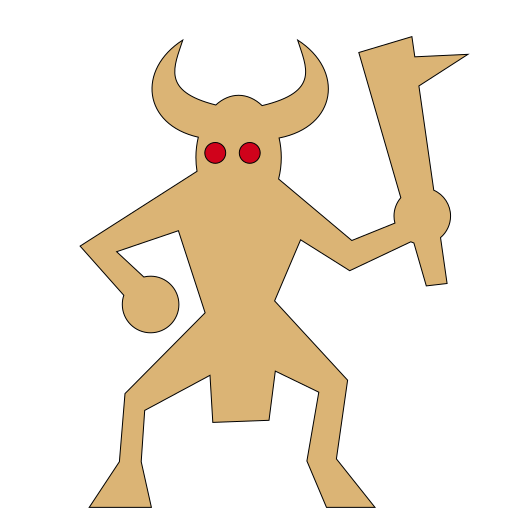
Large, brutish, ugly humanoids standing 9-10 feet tall
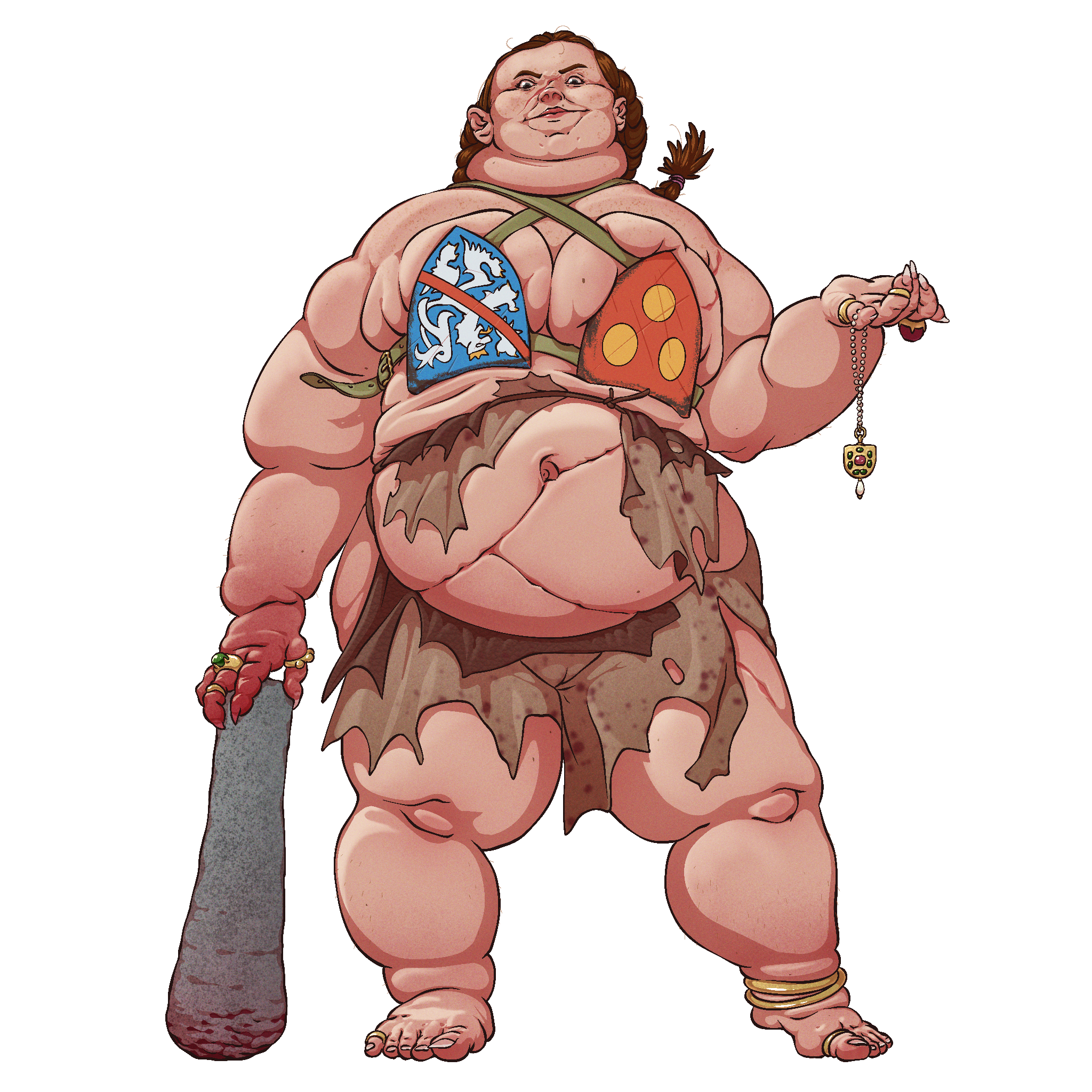
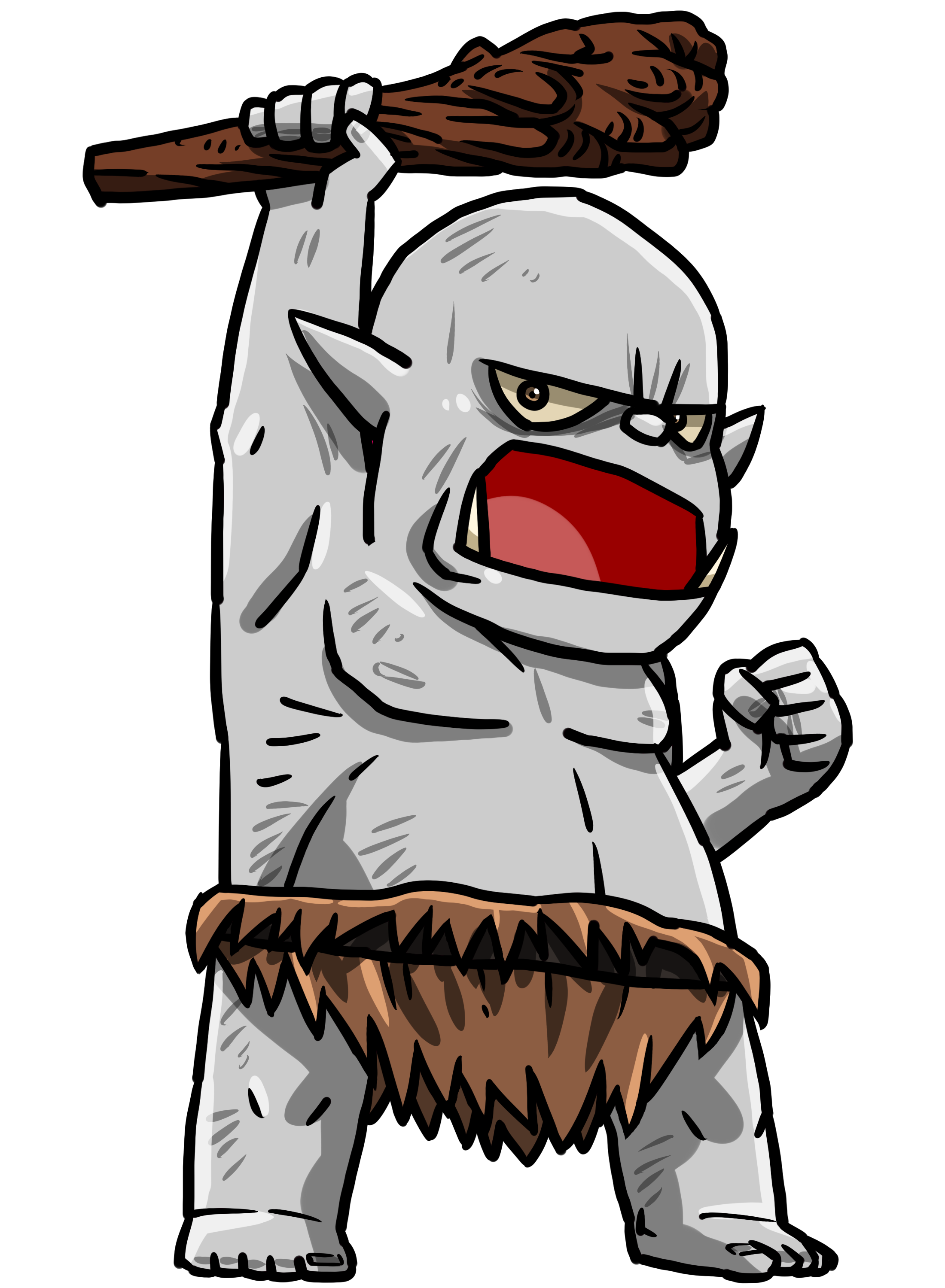
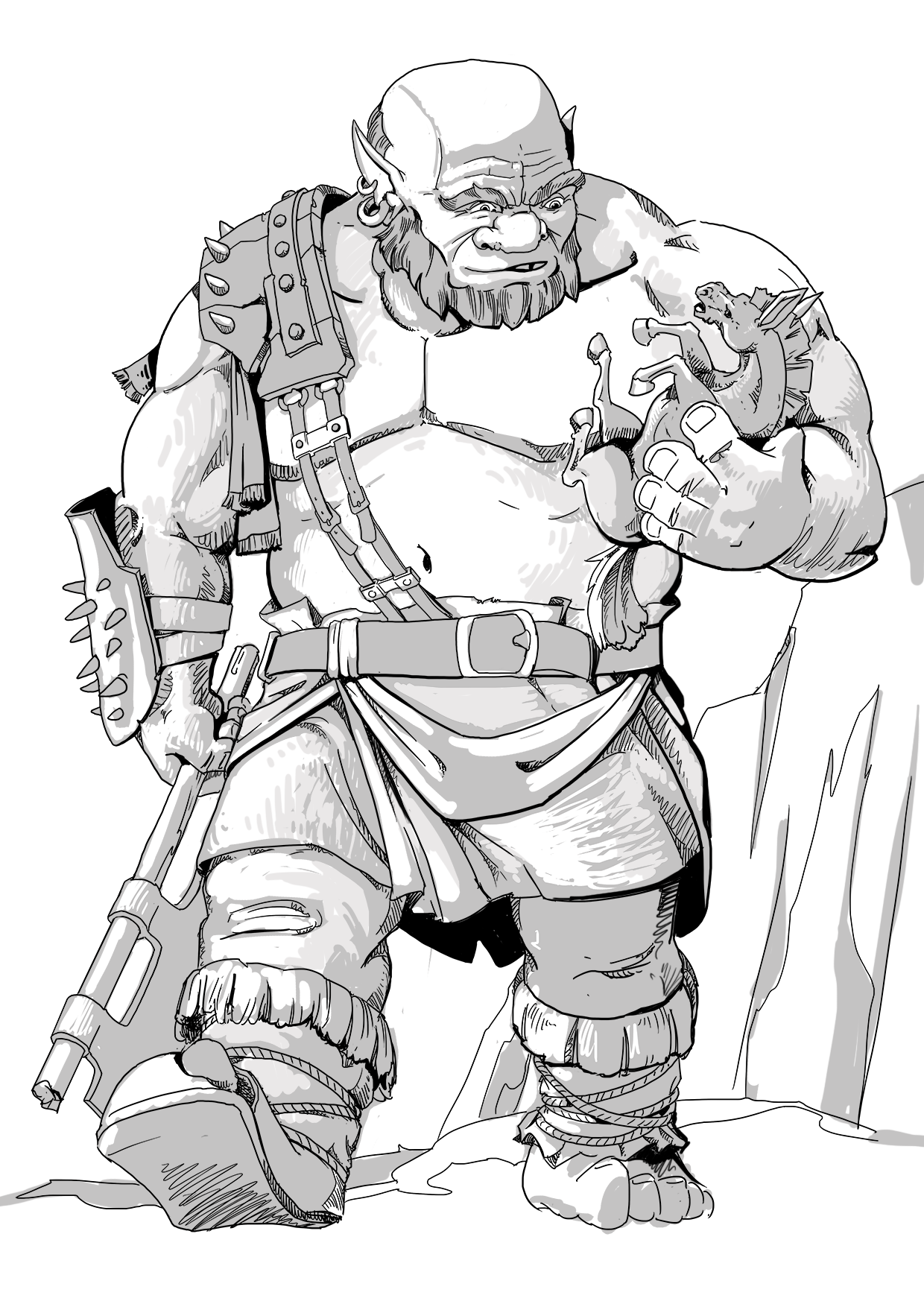
Ogres appear as large, very ugly humans. Adult ogres stand 9 to 10 feet tall and weigh 600 to 650 pounds. Their skin color ranges from dull yellow to dull brown. Their clothing consists of poorly cured furs and hides, which add to their naturally repellent odor. Ogres are brutish and aggressive, but inherently lazy. They employ direct attacks in combat, typically using large clubs, axes, or pole arms, generally causing 2d6 damage. If normal weapons are employed, an ogre has a +3 bonus to damage due to strength. If an ogre fights bare-handed, it does 1d8 subduing damage per hit.
Actions/Abilities/Traits: Basic Fantasy
Actions/Abilities/Traits: D&D 5e
Actions/Abilities/Traits: D&D 5e
Ogres are as lazy of mind as they are strong of body. They live by raiding, scavenging, and killing for food and pleasure. The average adult specimen stands between 9 and 10 feet tall and weighs close to a thousand pounds.
Furious Tempers
Ogres are notorious for their quick tempers, which flare at the smallest perceived offense. Insults and name-calling can rouse an ogre's wrath in an instant-as can stealing from it, bumping, jabbing, or prodding it, laughing, making faces, or simply looking at it the wrong way. When its rage is incited, an ogre lashes out in a frustrated tantrum until it runs out of objects or creatures to smash.
Gruesome Gluttons
Ogres eat almost anything, but they especially enjoy the taste of dwarves, halflings, and elves. When they can, they combine dinner with pleasure, chasing scurrying victims around before eating them raw. If enough of its victim remains after the ogre has gorged itself, it might make a loincloth from its quarry's skin and a necklace from its leftover bones. This macabre crafting is the height of ogre culture.
Greedy Collectors
An ogre's eyes glitter with avarice when it sees the possessions of others. Ogres carry rough sacks on their raids, which they fill with fabulous "treasure" taken from their victims. This might include a collection of battered helmets, a moldy wheel of cheese, a rough patch of animal fur fastened like a cloak, or a squealing, mud-spattered pig. Ogres also delight in the gleam of gold and silver, and they will fight one another over small handfuls of coins. Smarter creatures can earn an ogre's trust by offering it gold or a weapon forged for a creature of its size.
Legendary Stupidity
Few ogres can count to ten, even with their fingers in front of them. Most speak only a rudimentary form of Giant and know a smattering of Common words. Ogres believe what they are told and are easy to fool or confuse, but they break things they don't understand. Silver-tongued tricksters who test their talents on these savages typically end up eating their eloquent words-and then being eaten in turn.
Primitive Wanderers
Ogres clothe themselves in animal pelts and uproot trees for use as crude tools and weapons. They create stone-tipped javelins for hunting. When they establish lairs, they settle near the rural edges of civilized lands, taking advantage of poorly protected livestock, undefended larders, and unwary farmers.
An ogre sleeps in caves, animal dens, or under trees until it finds a cabin or isolated farmhouse, whereupon it kills the inhabitants and lairs there. Whenever it is bored or hungry, an ogre ventures out from its lair, attacking anything that crosses its path. Only after an ogre has depleted an area of food does it move on.
Ogre Gangs
Ogres sometimes band together in small, nomadic groups, but they lack a true sense of tribalism. When bands of ogres meet, one might attempt to capture the members of the other group to increase its numbers. However, ogre bands are just as likely to trade members freely, especially if the welcoming band is temporarily flush with food and weapons.
Whenever possible, ogres gang up with other monsters to bully or prey on creatures weaker than themselves. They associate freely with goblinoids, orcs, and trolls, and practically worship giants. In the giants' complex social structure (known as the ordning), ogres rank beneath the lowest giants in status. As a result, an ogre will do nearly anything a giant asks.
Worst. Dancers. Ever.
Ogres are 10-foot-tall brutes that overwhelm their foes and take what spoils they please. Ogre raiders ally with other evil forces in return for food, riches, and promises of battle.
Actions/Abilities/Traits: D&D 5e
Actions/Abilities/Traits: D&D 5e (Ogre Battering Ram)
Actions/Abilities/Traits: D&D 5e (Ogre Battering Ram)
An ogre battering ram carries an enormous club that's primarily used for bashing doors into kindling but also works well for smashing foes. These ogres are drilled in two simple tasks: rushing forward to shatter enemy fortifications and using their weapons to force an advancing enemy to halt.
Vile and violent though they be, ogres prove to be tractable minions for those unafraid to be brutal masters. I prefer giants, however.
Ogre Battering Ram
An ogre battering ram carries an enormous club used primarily for bashing doors into kindling, but which also works well for smashing foes. These ogres are drilled in two simple tasks: rushing forward to shatter enemy fortifications, and using their weapons to force an advancing enemy to halt.
Ogres
Ogres are infamously dim-witted, but with enough time and patience, some of them can be trained to carry out specialized missions in battle. The names they are given—the battering ram, the bolt launcher, the chain brute, and the howdah—reflect their particular functions. These jobs are simple, but they're tailored to take advantage of an ogre's strengths.
Actions/Abilities/Traits: D&D 5e (Ogre Battering Ram)
Actions/Abilities/Traits: D&D 5e (Ogre Bolt Launcher)
Actions/Abilities/Traits: D&D 5e (Ogre Bolt Launcher)
A bolt launcher carries a gigantic crossbow—a weapon so large it's essentially an ogre-held ballista. An ogre bolt launcher can load this immense weapon and loose its deadly missile as quickly as a dwarf handles a crossbow. The bolts are so large that few ogres can carry more than a half dozen at a time, but bolt launchers have been known to uproot small trees or tear beams out of buildings and launch those when their ammunition runs low.
Vile and violent though they be, ogres prove to be tractable minions for those unafraid to be brutal masters. I prefer giants, however.
Ogre Bolt Launcher
A bolt launcher carries a gigantic crossbow—a weapon so large it's essentially an ogre-held ballista. An ogre bolt launcher can load this immense weapon and loose its deadly missile as quickly as a dwarf handles a crossbow. The bolts are so large that few ogres can carry more than a half-dozen at a time, but bolt launchers have been known to uproot small trees or tear beams out of buildings and launch those when their ammunition runs low.
Ogres
Ogres are infamously dim-witted, but with enough time and patience, some of them can be trained to carry out specialized missions in battle. The names they are given—the battering ram, the bolt launcher, the chain brute, and the howdah—reflect their particular functions. These jobs are simple, but they're tailored to take advantage of an ogre's strengths.
Actions/Abilities/Traits: D&D 5e (Ogre Bolt Launcher)
Actions/Abilities/Traits: D&D 5e (Ogre Chain Brute)
Actions/Abilities/Traits: D&D 5e (Ogre Chain Brute)
An ogre chain brute wields a great spiked chain, swinging it with both hands in a wide circle to knock foes off their feet. Alternatively, the ogre can swing the chain in a crushing overhead smash.
Vile and violent though they be, ogres prove to be tractable minions for those unafraid to be brutal masters. I prefer giants, however.
Ogre Chain Brute
An ogre chain brute wields a great spiked chain. It swings this chain with both hands in a wide circle around itself to knock foes off their feet. Alternatively, it can swing the chain in a crushing overhead smash that's nearly impossible to block or deflect.
Ogres
Ogres are infamously dim-witted, but with enough time and patience, some of them can be trained to carry out specialized missions in battle. The names they are given—the battering ram, the bolt launcher, the chain brute, and the howdah—reflect their particular functions. These jobs are simple, but they're tailored to take advantage of an ogre's strengths.
Actions/Abilities/Traits: D&D 5e (Ogre Chain Brute)
Actions/Abilities/Traits: D&D 5e (Ogre Chitterlord)
Actions/Abilities/Traits: D&D 5e (Ogre Chitterlord)
When ogres first moved into the wilds of Eldraine, they encountered all manner of unfamiliar creatures: spellcasting witches, tricksy faeries, and talking beasts. Over generations, these ogres adapted to their new environs, passing down a spellcasting tradition of their own to help their kin wreak havoc in the wilds and beyond.
An ogre chitterlord exercises control over the rats that infest Dunbarrow and countless other regions in the wilds of Eldraine. When ogres venture from the wilds to raid nearby settlements, an ogre chitterlord often leads the way, calling rats from the alleys and sewers to harry townsfolk from within the city while the ogres lay siege to the outer walls. Should their rodent allies fail them, chitterlords can also turn the tide of any battle with their prodigious strength and druidic magic.
Actions/Abilities/Traits: D&D 5e (Ogre Chitterlord)
Actions/Abilities/Traits: D&D 5e (Ogre Howdah)
Actions/Abilities/Traits: D&D 5e (Ogre Howdah)
The most unusual of the specialized ogres, the howdah carries a palisaded wooden fort on its back. The fort serves as a fighting platform for up to four Small people. Ogre howdahs are most often seen bearing bow- and spear-wielding goblin||goblins into battle, or perhaps kobold||kobolds or Deep Gnome (Svirfneblin)||deep gnomes, but they might also transport other Small folk.
Vile and violent though they be, ogres prove to be tractable minions for those unafraid to be brutal masters. I prefer giants, however.
Ogre Howdah
The most unusual of the specialized ogres, the howdah carries a palisaded wooden fort on its back. The fort is big enough to serve as a fighting platform for up to four small humanoids. Ogre howdahs are most often seen bearing goblins equipped with bows and spears into battle, but they could just as easily transport kobolds, deep gnomes, or other humanoids of similar size.
Ogres
Ogres are infamously dim-witted, but with enough time and patience, some of them can be trained to carry out specialized missions in battle. The names they are given—the battering ram, the bolt launcher, the chain brute, and the howdah—reflect their particular functions. These jobs are simple, but they're tailored to take advantage of an ogre's strengths.
Actions/Abilities/Traits: D&D 5e (Ogre Howdah)
Actions/Abilities/Traits: OSRIC
Actions/Abilities/Traits: OSRIC
Large, brutish, ugly humanoids standing 9-10 feet tall
Ogres are malicious beings who live in all environments, whether above or below ground. They have affinity with hill giants and trolls, and often can be found with them. Additionally, ogres love wealth, and will hire themselves out to other creatures toward this end. When encountering ogres in their lair, there will be an additional 2d6 females and 2d4 young. The lair will contain slaves or prisoners 30% of the time. When capturing other beings, 25% of the time they are used as slaves where as the unlucky majority, or 75%, find their way to the supper table. Despite their low intelligence, ogres are social creatures and speak orc, troll, and the language of hill giants in addition to their own language and alignment tongue. Description: Aside from the elusive unhealthy purple coloured ogre, most ogres have skin that is dull yellow or dark brown. They have black-green or blue-black hair, and their skin is covered in dark wart-like bumps. They have purple eyes and white pupils, and their hard, thick nails and teeth are orange and sometimes black. Ogres live at least 90 years. They don furs or other animal hides, and their (often) mercenary lifestyle requires that they maintain the
Actions/Abilities/Traits: OSRIC
Actions/Abilities/Traits: Pathfinder 1e
Actions/Abilities/Traits: Pathfinder 1e
Actions/Abilities/Traits: Pathfinder 1e
Actions/Abilities/Traits: Pathfinder 1e (Ogre Destroyer)
Actions/Abilities/Traits: Pathfinder 1e (Ogre Destroyer)
Actions/Abilities/Traits: Pathfinder 1e (Ogre Destroyer)
Actions/Abilities/Traits: Pathfinder 1e (Ogre Priest)
Actions/Abilities/Traits: Pathfinder 1e (Ogre Priest)
Actions/Abilities/Traits: Pathfinder 1e (Ogre Priest)





hills, grasslands
uncommon

hills, forest
uncommon
taiga
uncommon
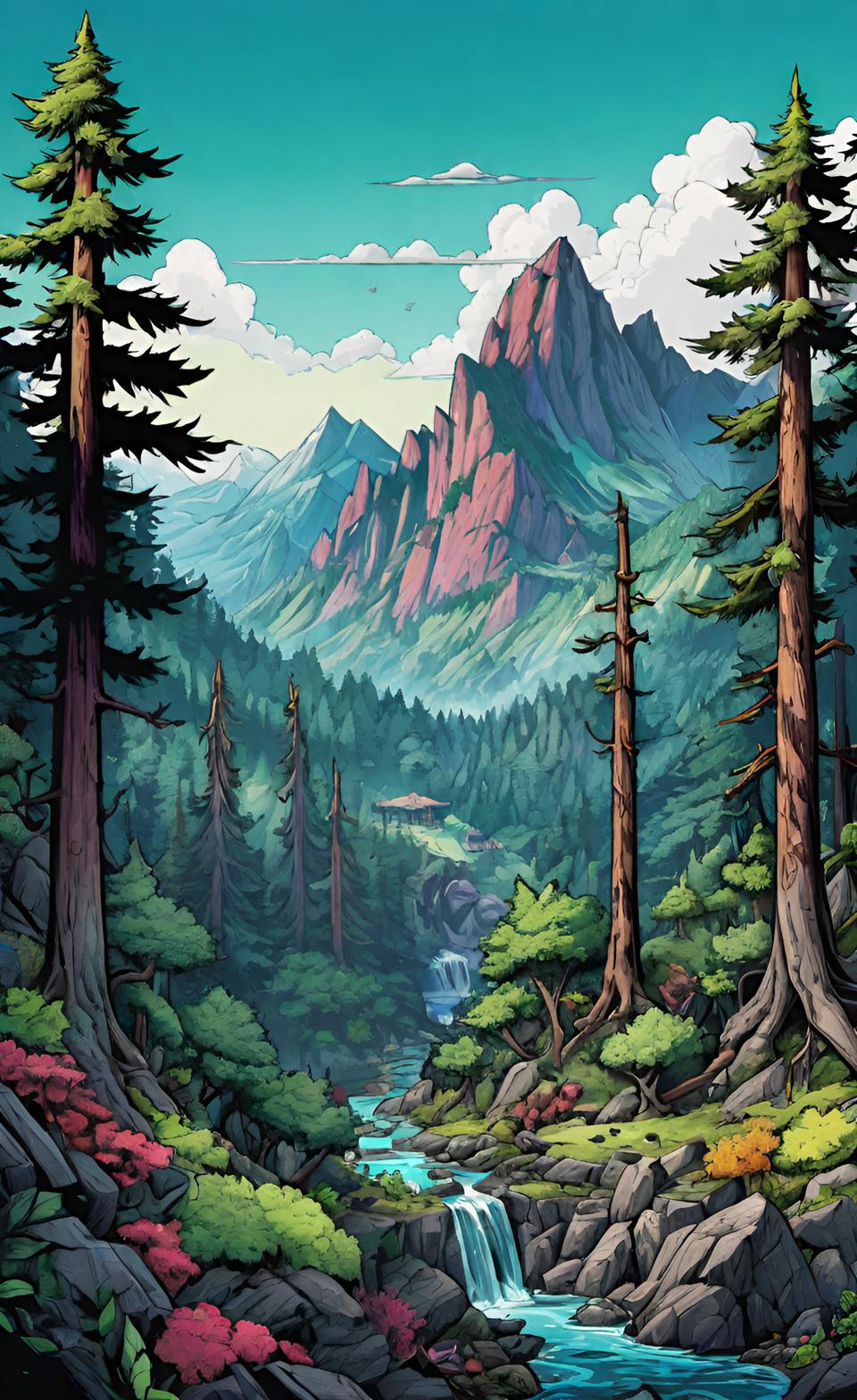
mountain, montane forest
uncommon

mountain, montane shrubland
rare

mountain, cave
uncommon
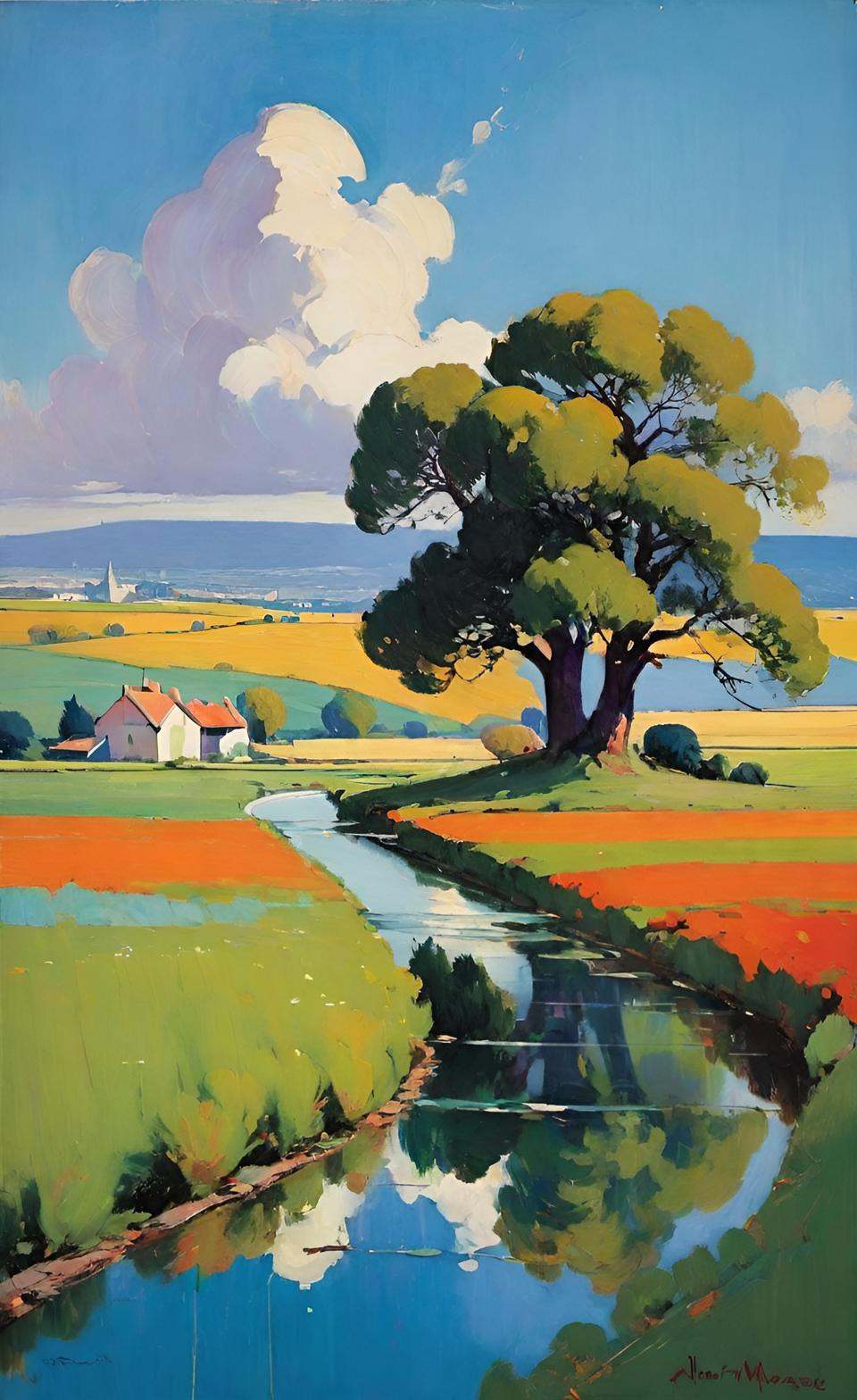
civilized, farmland
rare







Ogres are as lazy of mind as they are strong of body. They live by raiding, scavenging, and killing for food and pleasure. The average adult specimen stands between 9 and 10 feet tall and weighs close to a thousand pounds.
Furious Tempers
Ogres are notorious for their quick tempers, which flare at the smallest perceived offense. Insults and name-calling can rouse an ogre's wrath in an instant-as can stealing from it, bumping, jabbing, or prodding it, laughing, making faces, or simply looking at it the wrong way. When its rage is incited, an ogre lashes out in a frustrated tantrum until it runs out of objects or creatures to smash.
Gruesome Gluttons
Ogres eat almost anything, but they especially enjoy the taste of dwarves, halflings, and elves. When they can, they combine dinner with pleasure, chasing scurrying victims around before eating them raw. If enough of its victim remains after the ogre has gorged itself, it might make a loincloth from its quarry's skin and a necklace from its leftover bones. This macabre crafting is the height of ogre culture.
Greedy Collectors
An ogre's eyes glitter with avarice when it sees the possessions of others. Ogres carry rough sacks on their raids, which they fill with fabulous "treasure" taken from their victims. This might include a collection of battered helmets, a moldy wheel of cheese, a rough patch of animal fur fastened like a cloak, or a squealing, mud-spattered pig. Ogres also delight in the gleam of gold and silver, and they will fight one another over small handfuls of coins. Smarter creatures can earn an ogre's trust by offering it gold or a weapon forged for a creature of its size.
Legendary Stupidity
Few ogres can count to ten, even with their fingers in front of them. Most speak only a rudimentary form of Giant and know a smattering of Common words. Ogres believe what they are told and are easy to fool or confuse, but they break things they don't understand. Silver-tongued tricksters who test their talents on these savages typically end up eating their eloquent words-and then being eaten in turn.
Primitive Wanderers
Ogres clothe themselves in animal pelts and uproot trees for use as crude tools and weapons. They create stone-tipped javelins for hunting. When they establish lairs, they settle near the rural edges of civilized lands, taking advantage of poorly protected livestock, undefended larders, and unwary farmers.
An ogre sleeps in caves, animal dens, or under trees until it finds a cabin or isolated farmhouse, whereupon it kills the inhabitants and lairs there. Whenever it is bored or hungry, an ogre ventures out from its lair, attacking anything that crosses its path. Only after an ogre has depleted an area of food does it move on.
Ogre Gangs
Ogres sometimes band together in small, nomadic groups, but they lack a true sense of tribalism. When bands of ogres meet, one might attempt to capture the members of the other group to increase its numbers. However, ogre bands are just as likely to trade members freely, especially if the welcoming band is temporarily flush with food and weapons.
Whenever possible, ogres gang up with other monsters to bully or prey on creatures weaker than themselves. They associate freely with goblinoids, orcs, and trolls, and practically worship giants. In the giants' complex social structure (known as the ordning), ogres rank beneath the lowest giants in status. As a result, an ogre will do nearly anything a giant asks.
Worst. Dancers. Ever.
Ogres are 10-foot-tall brutes that overwhelm their foes and take what spoils they please. Ogre raiders ally with other evil forces in return for food, riches, and promises of battle.
Large, brutish, ugly humanoids standing 9-10 feet tall
Ogres appear as large, very ugly humans. Adult ogres stand 9 to 10 feet tall and weigh 600 to 650 pounds. Their skin color ranges from dull yellow to dull brown. Their clothing consists of poorly cured furs and hides, which add to their naturally repellent odor. Ogres are brutish and aggressive, but inherently lazy. They employ direct attacks in combat, typically using large clubs, axes, or pole arms, generally causing 2d6 damage. If normal weapons are employed, an ogre has a +3 bonus to damage due to strength. If an ogre fights bare-handed, it does 1d8 subduing damage per hit.
Frightful humanoids, 8-10' tall, dressed in animal hides. Often dwell in caves.
Large, brutish, ugly humanoids standing 9-10 feet tall
Ogres are malicious beings who live in all environments, whether above or below ground. They have affinity with hill giants and trolls, and often can be found with them. Additionally, ogres love wealth, and will hire themselves out to other creatures toward this end. When encountering ogres in their lair, there will be an additional 2d6 females and 2d4 young. The lair will contain slaves or prisoners 30% of the time. When capturing other beings, 25% of the time they are used as slaves where as the unlucky majority, or 75%, find their way to the supper table. Despite their low intelligence, ogres are social creatures and speak orc, troll, and the language of hill giants in addition to their own language and alignment tongue. Description: Aside from the elusive unhealthy purple coloured ogre, most ogres have skin that is dull yellow or dark brown. They have black-green or blue-black hair, and their skin is covered in dark wart-like bumps. They have purple eyes and white pupils, and their hard, thick nails and teeth are orange and sometimes black. Ogres live at least 90 years. They don furs or other animal hides, and their (often) mercenary lifestyle requires that they maintain the

Illustrated Bestiary
Miko Arc
Mariana Ruiz Villarreal
 (22)
(22)


 (32)
(32)
Land Of Eem Bestiary Land Of Eem
The Monsters Know What They're Doing Dungeons And Dragons
The Monsters Know What They're Doing 2 (moar) Dungeons And Dragons
Angry Golem D&D 5e
OSE Encounter Activity Tables Any
Pathfinder 1e Bestiary 1 Pathfinder
Pathfinder 2e Bestiary 1 Pathfinder
Monster Codex Pathfinder
The Daily Bestiary Pathfinder
Classic Monsters Revisited Pathfinder
Mythic Adventures Pathfinder
Kobold Press Tome Of Beasts 2 D&D 5e
Flee, Mortals D&D 5e
Ultimate Bestiary: Revenge Of The Horde D&D 5e
Mordenkainen's Tome Of Foes D&D 5e
Monsters Of The Underworld D&D 5e
Monster Ecology Anthology D&D 5e
Dungeons And Dragons Essentials: Monster Vault D&D 4e
Scruffy Grognard's Monstrous Manual D&D 2e
AD&D Monster Manual AD&D 1e
13th Age Bestiary 13th Age
Dragonlance Bestiary SAGA
Hacklopedia Of Beasts Hackmaster v5
Dragonbane Bestiary Dragonbane
Critters, Creatures, & Denizens Dungeon Crawl Classics
Monsters Compendium Heroes Of Adventure
Manual Of Monsters World Of Warcraft RPG
Old World Bestiary Warhammer
Mystara Adversary Compendium I Dragon Age
Adventures Dark And Deep Adventures Dark And Deep