



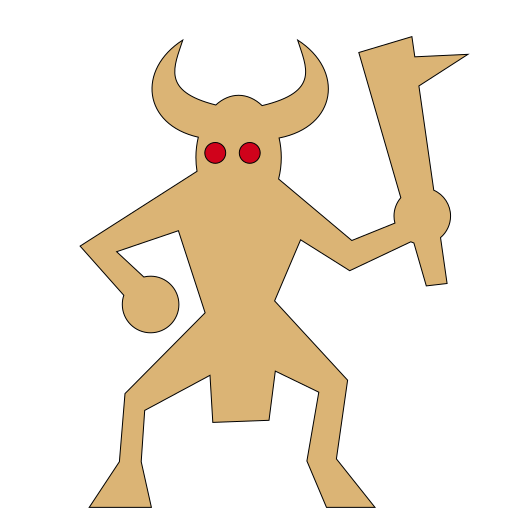










To Draw Creatures From:



And you gotta believe me
Ram: Larger, thicker coat, horns are curved back (male sheep)
| Alpbock | Amalthean Goat | Capricorn | Criosphinx | Faun |
| Giant Goat | Goat | Ibixian | Kalke | Lantern Goat |
| Mehrim | Mountain Strider | Numru | Satyr | Tumble Ox |
 Actions/Abilities/Traits: Basic Fantasy
Actions/Abilities/Traits: Basic Fantasy
Actions/Abilities/Traits: Basic Fantasy
A creature with the upper half of a man and the lower half of a goat, with red or chestnut brown hair, and jet black hooves and horns
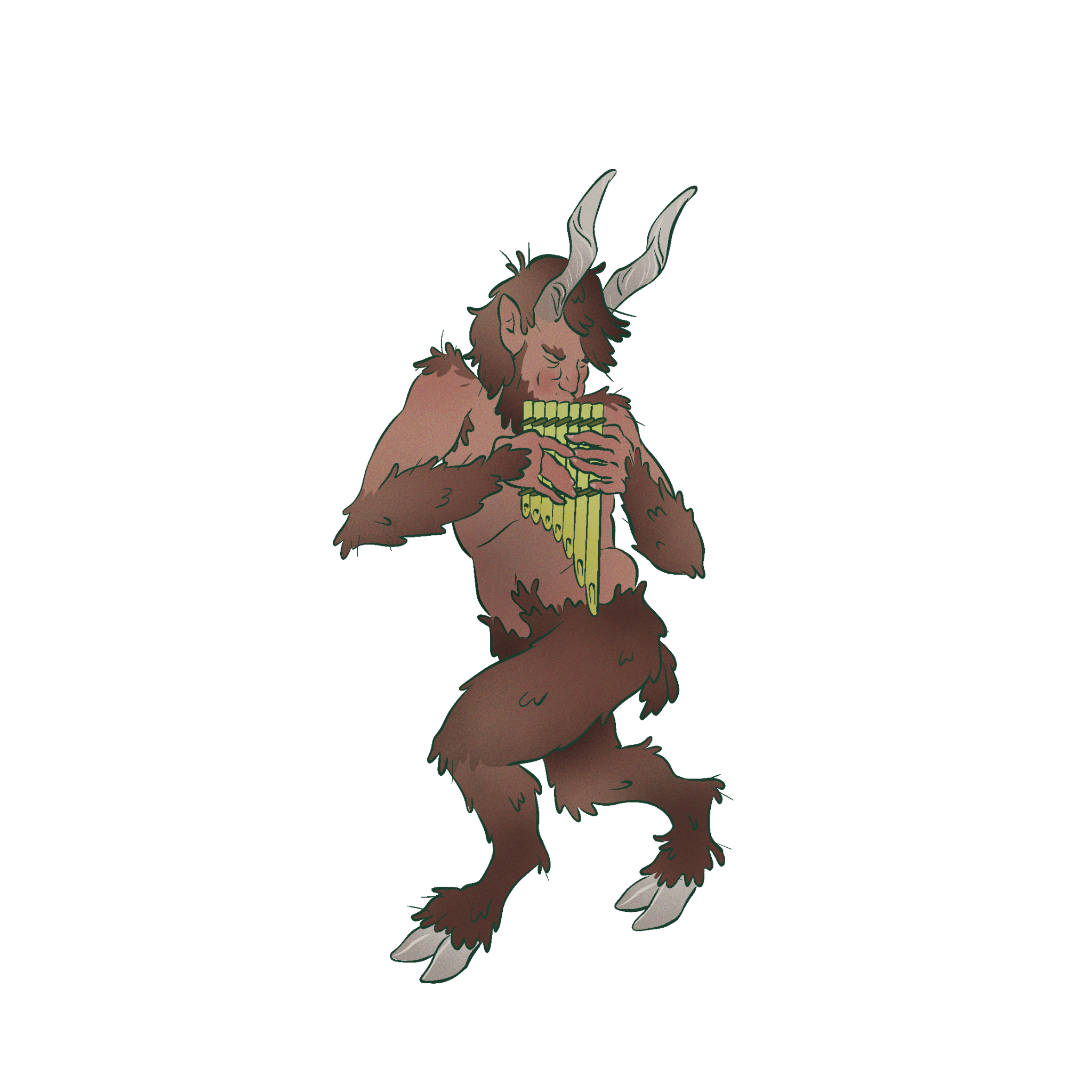
A Satyr's body has the upper half of a man and the lower half of a goat, with red or chestnut brown hair, and hooves and horns that are jet black. It speaks Sylvan, and most also speak Common. A satyr is related to its lesser kin (fauns and ibix), but are rarer and more reclusive. The keen senses of a satyr make it almost impossible to surprise one in the wild. Conversely, with its own natural grace and agility, a satyr can sneak up on travelers who are not carefully watching the surrounding wilderness. Once engaged in battle, an unarmed satyr attacks with a powerful head butt. A satyr expecting trouble is likely to also be armed with a bow and a dagger.
Actions/Abilities/Traits: Basic Fantasy
Actions/Abilities/Traits: D&D 5e
Actions/Abilities/Traits: D&D 5e
This handsome, grinning man has the furry legs of a goat and a set of curling ram horns extending from his temples.
Satyrs are raucous fey that frolic in wild forests, driven by curiosity and hedonism in equal measure.
Satyrs resemble stout male humans with the furry lower bodies and cloven hooves of goats. Horns sprout from their heads, ranging in shape from a pair of small nubs to large, curling rams' horns. They typically sport facial hair.
Hedonistic Revelers
Satyrs crave the strongest drink, the most fragrant spices, and the most dizzying dances. A satyr feels starved when it can't indulge itself, and it goes to great lengths to sate its desires. It might kidnap a fine minstrel to hear lovely songs, sneak through a well-defended garden to gaze upon a beautiful lad or lass, or infiltrate a palace to taste the finest food in the land. Satyrs allow no festivity to pass them by. They partake in any holiday they've heard of. Civilizations of the world have enough festivals and holy days among them to justify nonstop celebration.
Inebriated on drink and pleasure, satyrs give no thought to the consequences of the hedonism they incite in others. They leave such creatures mystified at their own behavior. Such revelers might have to scrounge for excuses to explain their disordered state to parents, employers, family, or friends.
Twixt day and night the spirits goad me on
They pine for ages past when hearts were pure
Against all reason now they seem unsure
They laugh and scream between mine ears anon.
Now fill my cup not once, not twice, but thrice
With flag's brim upon my lips I dance
Let unseen pixies toss their gowns askance
While I, the Carnal King, indulge my vice.
With folded boughs, the treants take their leave
As merry damsels' corsets come undone
My song doth stir them like a summer breeze
They fill mine empty cup without reprieve.
The sun becomes the moon becomes the sun
I while away the hours as I please.
Satyrs enjoy demonstrating their physicality through contests, evicting party poopers, and defending Fey realms.
Actions/Abilities/Traits: D&D 5e
Actions/Abilities/Traits: D&D 5e (Satyr Reveler)
Actions/Abilities/Traits: D&D 5e (Satyr Reveler)
Pursuing lives of endless reverie, satyr revelers eagerly participate in celebrations wherever they find them. Their boisterous natures go far toward tempting others to eat, drink, and carouse with them. Faced with stodgier individuals or outright rivals, satyr revelers don't balk at using the magic of their music, dance, or other performances to charm opponents into joining their festivities. In the aftermath, these satyrs' foes are more likely to suffer embarrassment and groggy mornings than any lasting harm.
While most satyrs are known for their high spirits, love of revels, and gregarious personalities, these outgoing people are neither naive nor defenseless. Some satyrs delightedly torment stuffy individuals or pull pranks on the unwary, pastimes that can predictably lead to scuffles. If a satyr can't talk their way out of a conflict—or diffuse it with a good-natured distraction—they readily defend themselves, their friends, and their homes in the Skola Vale. With diversions aside, satyrs bend their cleverness toward tactics and methods of ending conflicts as swiftly as possible. This often means turning the same skills that make them famed celebrants toward battle, be it captivating performances or the aim developed through endless games of skill. Once a threat is overcome, though, satyrs are quick to engage in their favorite part of battle: the victory celebration.
Actions/Abilities/Traits: D&D 5e (Satyr Reveler)
Actions/Abilities/Traits: D&D 5e (Satyr Revelmaster)
Actions/Abilities/Traits: D&D 5e (Satyr Revelmaster)
Satyr revelmasters use magical music to change the moods of other creatures. They do so to keep their celebrations exciting and to ward off foes.
Actions/Abilities/Traits: D&D 5e (Satyr Revelmaster)
Actions/Abilities/Traits: D&D 5e (Satyr Thornbearer)
Actions/Abilities/Traits: D&D 5e (Satyr Thornbearer)
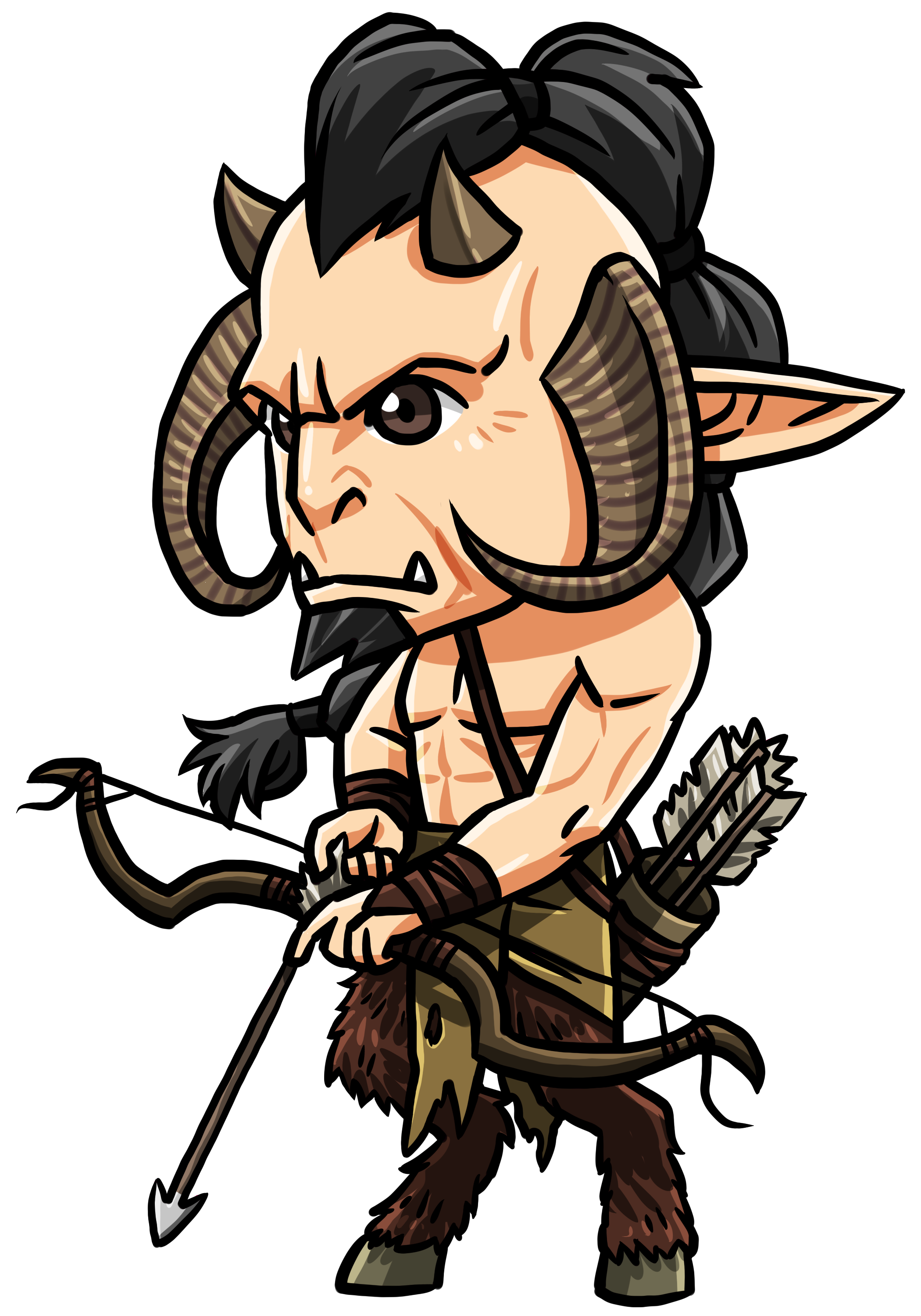
Not all satyrs live lives of pure whimsy. When forced to defend their friends and homes, satyr thornbearers are quick to take up their bows and strike against danger. Particularly amid the dense trees of the Skola Vale, these satyr skirmishers cooperate in loose teams, using guerrilla tactics to harass foes then melt back into the forest. The blessings of Nylea aid the satyrs in protecting their home, and a single arrow from a thornbearer's bow might rain down like a volley from a whole army.
While most satyrs are known for their high spirits, love of revels, and gregarious personalities, these outgoing people are neither naive nor defenseless. Some satyrs delightedly torment stuffy individuals or pull pranks on the unwary, pastimes that can predictably lead to scuffles. If a satyr can't talk their way out of a conflict—or diffuse it with a good-natured distraction—they readily defend themselves, their friends, and their homes in the Skola Vale. With diversions aside, satyrs bend their cleverness toward tactics and methods of ending conflicts as swiftly as possible. This often means turning the same skills that make them famed celebrants toward battle, be it captivating performances or the aim developed through endless games of skill. Once a threat is overcome, though, satyrs are quick to engage in their favorite part of battle: the victory celebration.
Actions/Abilities/Traits: D&D 5e (Satyr Thornbearer)
Actions/Abilities/Traits: Pathfinder 1e
Actions/Abilities/Traits: Pathfinder 1e
Actions/Abilities/Traits: Pathfinder 1e


forest
rare


This handsome, grinning man has the furry legs of a goat and a set of curling ram horns extending from his temples.
Satyrs are raucous fey that frolic in wild forests, driven by curiosity and hedonism in equal measure.
Satyrs resemble stout male humans with the furry lower bodies and cloven hooves of goats. Horns sprout from their heads, ranging in shape from a pair of small nubs to large, curling rams' horns. They typically sport facial hair.
Hedonistic Revelers
Satyrs crave the strongest drink, the most fragrant spices, and the most dizzying dances. A satyr feels starved when it can't indulge itself, and it goes to great lengths to sate its desires. It might kidnap a fine minstrel to hear lovely songs, sneak through a well-defended garden to gaze upon a beautiful lad or lass, or infiltrate a palace to taste the finest food in the land. Satyrs allow no festivity to pass them by. They partake in any holiday they've heard of. Civilizations of the world have enough festivals and holy days among them to justify nonstop celebration.
Inebriated on drink and pleasure, satyrs give no thought to the consequences of the hedonism they incite in others. They leave such creatures mystified at their own behavior. Such revelers might have to scrounge for excuses to explain their disordered state to parents, employers, family, or friends.
Twixt day and night the spirits goad me on
They pine for ages past when hearts were pure
Against all reason now they seem unsure
They laugh and scream between mine ears anon.
Now fill my cup not once, not twice, but thrice
With flag's brim upon my lips I dance
Let unseen pixies toss their gowns askance
While I, the Carnal King, indulge my vice.
With folded boughs, the treants take their leave
As merry damsels' corsets come undone
My song doth stir them like a summer breeze
They fill mine empty cup without reprieve.
The sun becomes the moon becomes the sun
I while away the hours as I please.
Satyrs enjoy demonstrating their physicality through contests, evicting party poopers, and defending Fey realms.
A creature with the upper half of a man and the lower half of a goat, with red or chestnut brown hair, and jet black hooves and horns
A Satyr's body has the upper half of a man and the lower half of a goat, with red or chestnut brown hair, and hooves and horns that are jet black. It speaks Sylvan, and most also speak Common. A satyr is related to its lesser kin (fauns and ibix), but are rarer and more reclusive. The keen senses of a satyr make it almost impossible to surprise one in the wild. Conversely, with its own natural grace and agility, a satyr can sneak up on travelers who are not carefully watching the surrounding wilderness. Once engaged in battle, an unarmed satyr attacks with a powerful head butt. A satyr expecting trouble is likely to also be armed with a bow and a dagger.

Illustrated Bestiary
Miko Arc
 (4)
(4)

 (9)
(9)
The Monsters Know What They're Doing Dungeons And Dragons
The Daily Bestiary Pathfinder
Faerie Bestiary D&D 5e
Monster Ecology Anthology D&D 5e
Scruffy Grognard's Monstrous Manual D&D 2e
AD&D Monster Manual AD&D 1e
Dragonlance Bestiary SAGA
Dragonbane Bestiary Dragonbane
Godforsaken Cypher System