













To Draw Creatures From:



Your magic is strange and new
 Actions/Abilities/Traits: Basic Fantasy
Actions/Abilities/Traits: Basic Fantasy
Actions/Abilities/Traits: Basic Fantasy
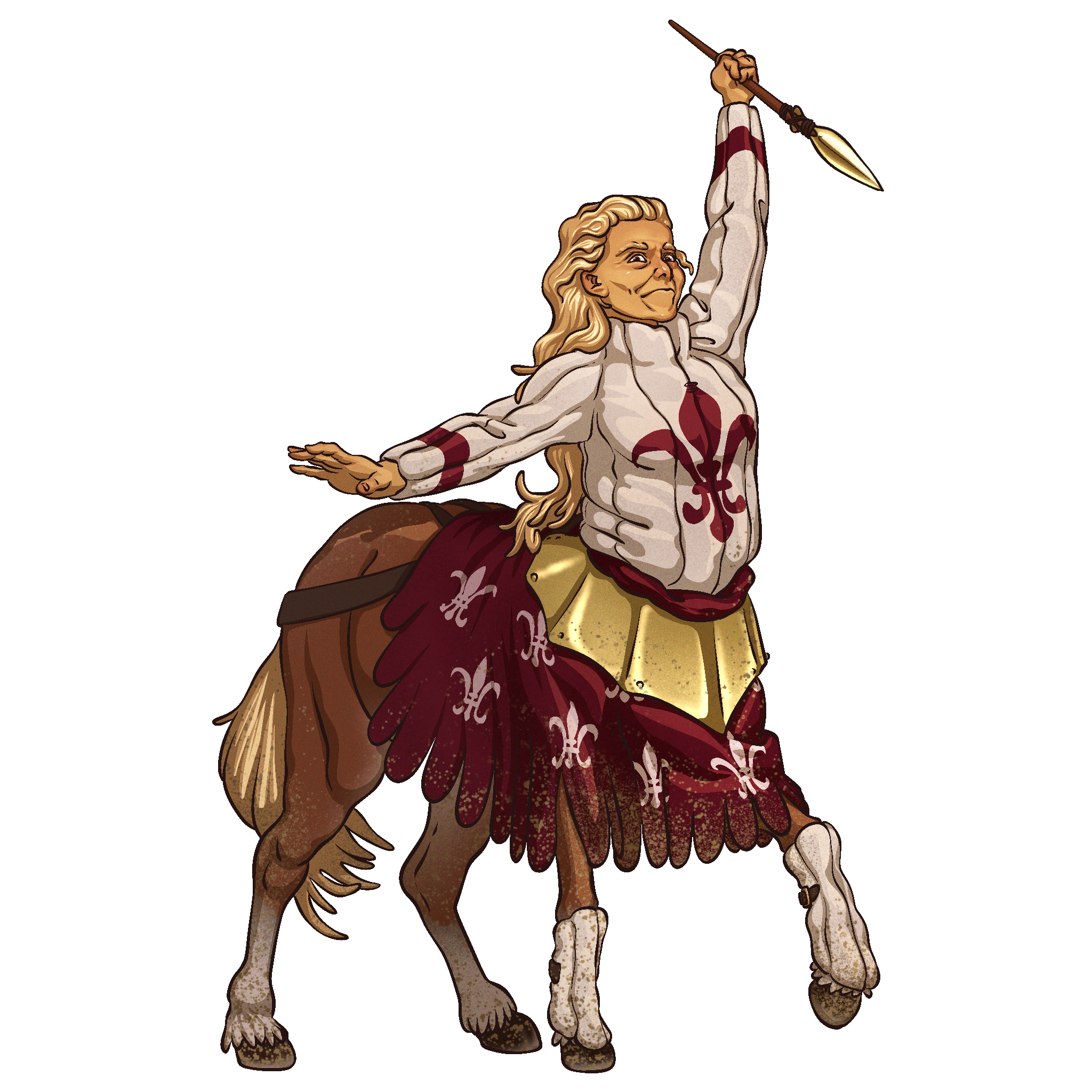
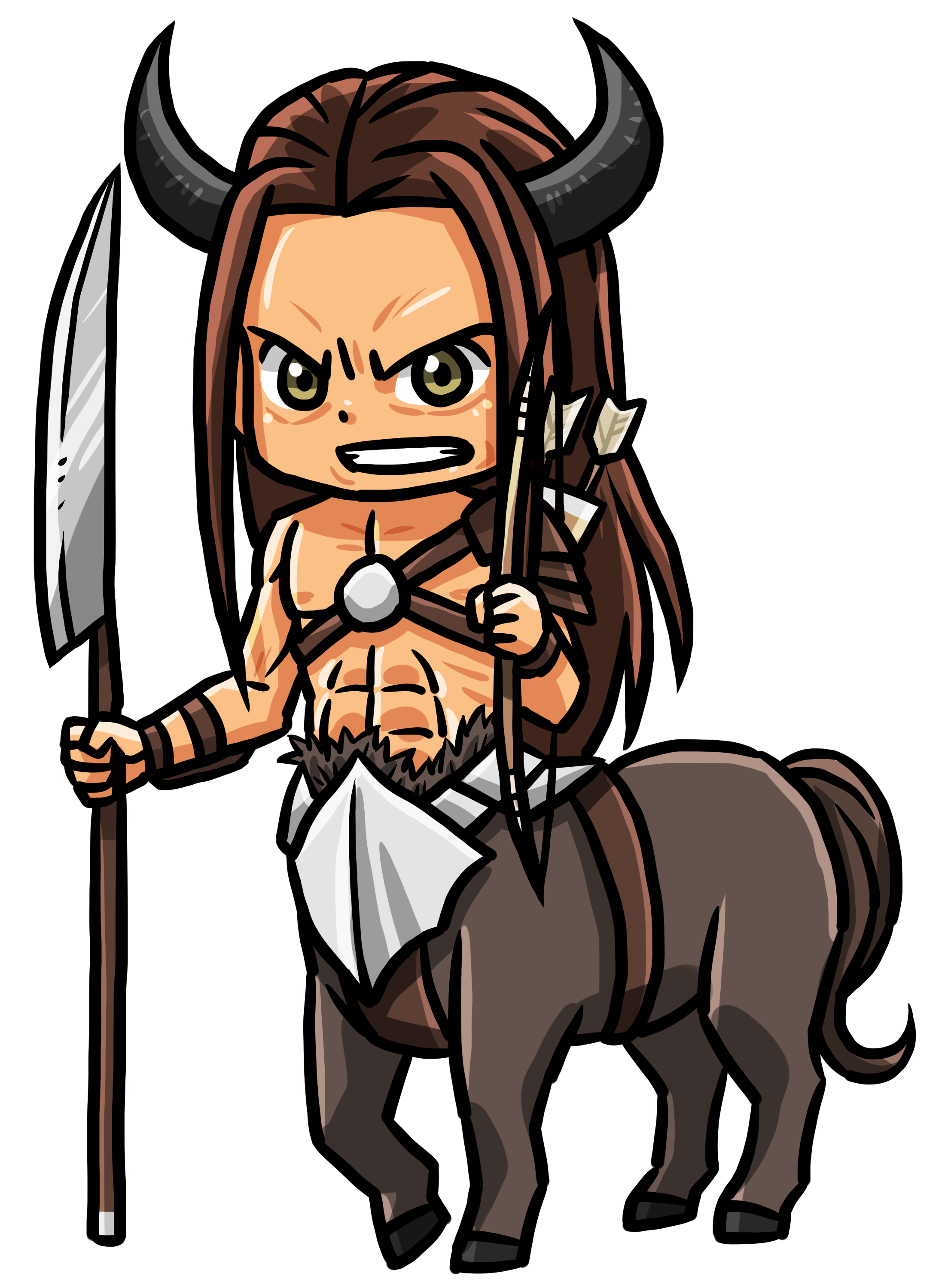
Half man, half horse creatures that are haughty, aloof, but very honorable
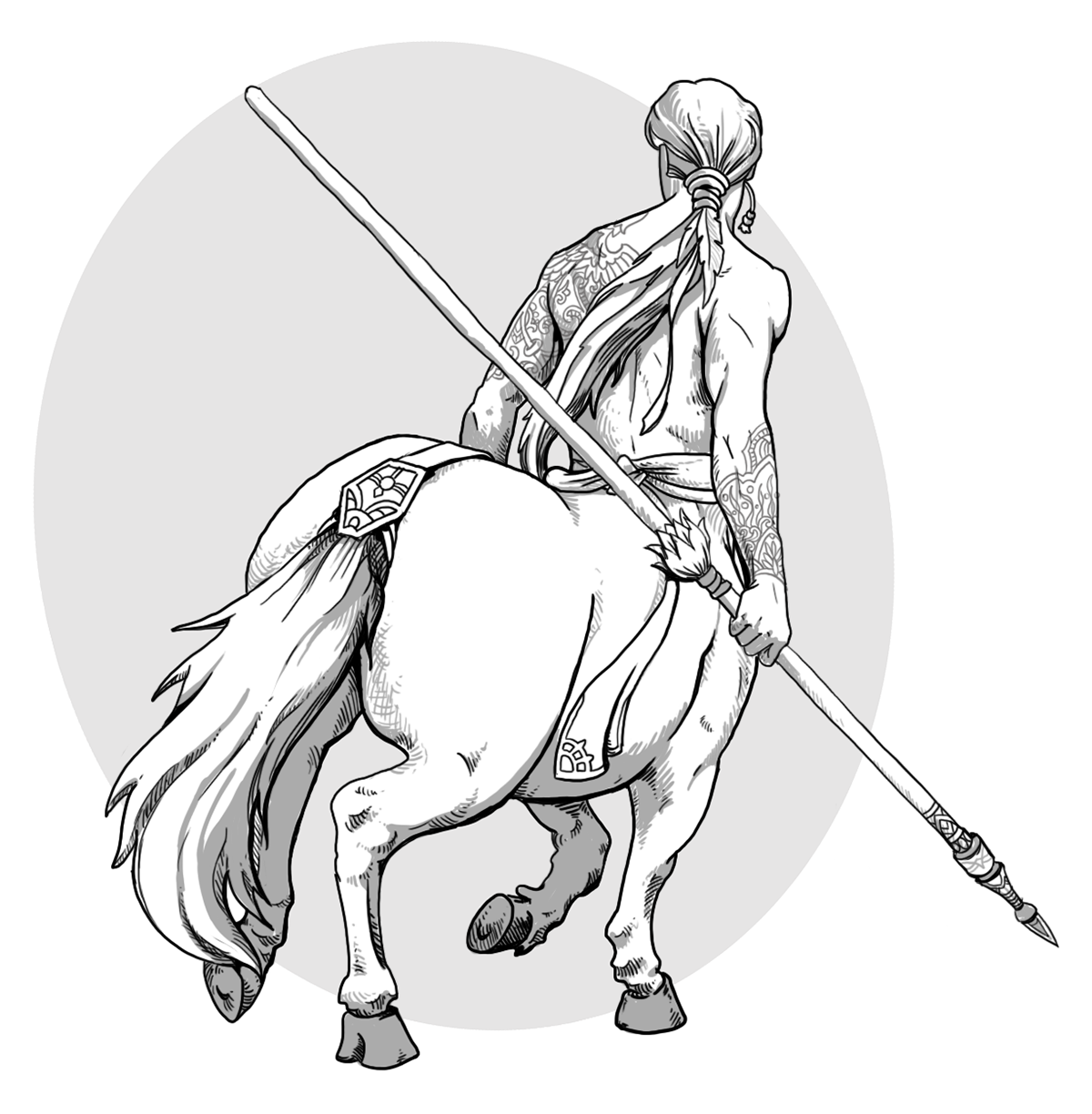
Centaurs appear to be half man, half horse, having the torso, arms and head of a man in the position a horse's head would otherwise occupy. A centaur is as big as a heavy horse, but much taller and slightly heavier; average males are about 7 feet tall and weigh about 2,100 pounds, and females are just a bit smaller. Centaurs may charge with a spear or lance just as a man on horseback, with the same bonuses. They typically wear leather armor when prepared for combat. Centaurs are generally haughty and aloof, but very honorable. Most would rather die than allow humans, demi-humans, or humanoids to ride on their backs.
Actions/Abilities/Traits: Basic Fantasy
Actions/Abilities/Traits: D&D 5e
Actions/Abilities/Traits: D&D 5e
This creature has the sun-bronzed upper body of a seasoned warrior and the lower body of a sleek warhorse.
Reclusive wanderers and omen-readers of the wild, centaurs avoid conflict but fight fiercely when pressed. They roam the vast wilderness, keeping far from borders, laws, and the company of other creatures.
Wilderness Nomads
Centaur tribes range across lands with mild to hot climates, where a centaur requires only light furs or oiled skins to deal with inclement weather. They are hunter-gatherers and rarely build shelters or even use tents.
Centaur migrations span continents and take decades to repeat, so that a centaur tribe might not retread the same path for generations. These long-ranging patterns can lead to conflict when centaurs encounter settlements of other creatures built along their traditional routes.
Reluctant Settlers
A centaur that can't keep pace with the rest of its tribe is left behind. Some such centaurs vanish into the wilderness and are never seen again. Those that can bear the loss of their tribe might take up residence among other races. Frontier settlements value the nature knowledge of their centaur residents. Many such communities owe their survival to the insight and acumen of a centaur.
Despite their reclusive nature, centaurs trade with elves and with the caravans of other benevolent humanoids they meet during their wanderings. A trader might save the life of a wounded or an elderly centaur unfit for long travel, escorting it to a settlement where it can peacefully live out the rest of its days.
I hear centaurs make excellent mounts!
Actions/Abilities/Traits: D&D 5e
Actions/Abilities/Traits: D&D 5e (Centaur Trooper)
Actions/Abilities/Traits: D&D 5e (Centaur Trooper)
Centaur troopers are knight-like guardians. Many are suspicious of non-Fey creatures.
Actions/Abilities/Traits: D&D 5e (Centaur Trooper)
Actions/Abilities/Traits: D&D 5e (Centaur Warden)
Actions/Abilities/Traits: D&D 5e (Centaur Warden)
Centaur wardens often lead groups of centaur troopers and act as intermediaries between Fey creatures and trespassers into their territories.
Actions/Abilities/Traits: D&D 5e (Centaur Warden)
Actions/Abilities/Traits: OSRIC
Actions/Abilities/Traits: OSRIC
Half man, half horse creatures that are haughty, aloof, but very honorable
Centaurs are part man, part horse. They have the body of a horse, but have the upper torso, arms and head of a human in place of the horse's neck and head. Antipathetic toward humans, yet friendly toward elves and their kin, centaurs prefer unfrequented glades, pastures and woodlands. An encountered coterie will be armed with: 50% hardwood clubs (2d4 damage), 25% composite and/or longbows with the remaining centaurs armed with lance and shield (thus, AC 4)—this last group being the leaders. All centaurs are capable of attacking with melee weapons and two hoof attacks each melee round. If upon rare occasion encountered in their lush woodland lair, there will be an additional 1d6 (total 5d6 encountered) fighting centaurs, with twice that many females and 5d6 young. Non-fighting (female and elderly) centaurs possess but 3 hit dice and young only 1d3 hit points. The non-fighters and young attack only if directly threatened, and with hoof attacks only. Should the non-fighting and young centaurs be seriously threatened, there is a 90% chance they will be ransomed generously.
Actions/Abilities/Traits: OSRIC
Actions/Abilities/Traits: Pathfinder 1e
Actions/Abilities/Traits: Pathfinder 1e
Actions/Abilities/Traits: Pathfinder 1e


forest
rare


This creature has the sun-bronzed upper body of a seasoned warrior and the lower body of a sleek warhorse.
Reclusive wanderers and omen-readers of the wild, centaurs avoid conflict but fight fiercely when pressed. They roam the vast wilderness, keeping far from borders, laws, and the company of other creatures.
Wilderness Nomads
Centaur tribes range across lands with mild to hot climates, where a centaur requires only light furs or oiled skins to deal with inclement weather. They are hunter-gatherers and rarely build shelters or even use tents.
Centaur migrations span continents and take decades to repeat, so that a centaur tribe might not retread the same path for generations. These long-ranging patterns can lead to conflict when centaurs encounter settlements of other creatures built along their traditional routes.
Reluctant Settlers
A centaur that can't keep pace with the rest of its tribe is left behind. Some such centaurs vanish into the wilderness and are never seen again. Those that can bear the loss of their tribe might take up residence among other races. Frontier settlements value the nature knowledge of their centaur residents. Many such communities owe their survival to the insight and acumen of a centaur.
Despite their reclusive nature, centaurs trade with elves and with the caravans of other benevolent humanoids they meet during their wanderings. A trader might save the life of a wounded or an elderly centaur unfit for long travel, escorting it to a settlement where it can peacefully live out the rest of its days.
I hear centaurs make excellent mounts!
Half man, half horse creatures that are haughty, aloof, but very honorable
Centaurs appear to be half man, half horse, having the torso, arms and head of a man in the position a horse's head would otherwise occupy. A centaur is as big as a heavy horse, but much taller and slightly heavier; average males are about 7 feet tall and weigh about 2,100 pounds, and females are just a bit smaller. Centaurs may charge with a spear or lance just as a man on horseback, with the same bonuses. They typically wear leather armor when prepared for combat. Centaurs are generally haughty and aloof, but very honorable. Most would rather die than allow humans, demi-humans, or humanoids to ride on their backs.
Fantastic creatures with the legs and body of a horse, and the upper body and head of a human. Live in small family or tribal groups, in wild meadows and isolated forests.
Half man, half horse creatures that are haughty, aloof, but very honorable
Centaurs are part man, part horse. They have the body of a horse, but have the upper torso, arms and head of a human in place of the horse's neck and head. Antipathetic toward humans, yet friendly toward elves and their kin, centaurs prefer unfrequented glades, pastures and woodlands. An encountered coterie will be armed with: 50% hardwood clubs (2d4 damage), 25% composite and/or longbows with the remaining centaurs armed with lance and shield (thus, AC 4)—this last group being the leaders. All centaurs are capable of attacking with melee weapons and two hoof attacks each melee round. If upon rare occasion encountered in their lush woodland lair, there will be an additional 1d6 (total 5d6 encountered) fighting centaurs, with twice that many females and 5d6 young. Non-fighting (female and elderly) centaurs possess but 3 hit dice and young only 1d3 hit points. The non-fighters and young attack only if directly threatened, and with hoof attacks only. Should the non-fighting and young centaurs be seriously threatened, there is a 90% chance they will be ransomed generously.

Illustrated Bestiary
Miko Arc
Justin Nichol
Mariana Ruiz Villarreal
 (5)
(5)

 (11)
(11)
The Monsters & Creatures Compendium Any
Land Of Eem Bestiary Land Of Eem
The Monsters Know What They're Doing Dungeons And Dragons
Pathfinder 1e Bestiary 1 Pathfinder
The Daily Bestiary Pathfinder
Monster Ecology Anthology D&D 5e
Scruffy Grognard's Monstrous Manual D&D 2e
AD&D Monster Manual AD&D 1e
Dragonbane Bestiary Dragonbane