













To Draw Creatures From:



But your lips are venomous poison
 Actions/Abilities/Traits: Basic Fantasy
Actions/Abilities/Traits: Basic Fantasy
Actions/Abilities/Traits: Basic Fantasy
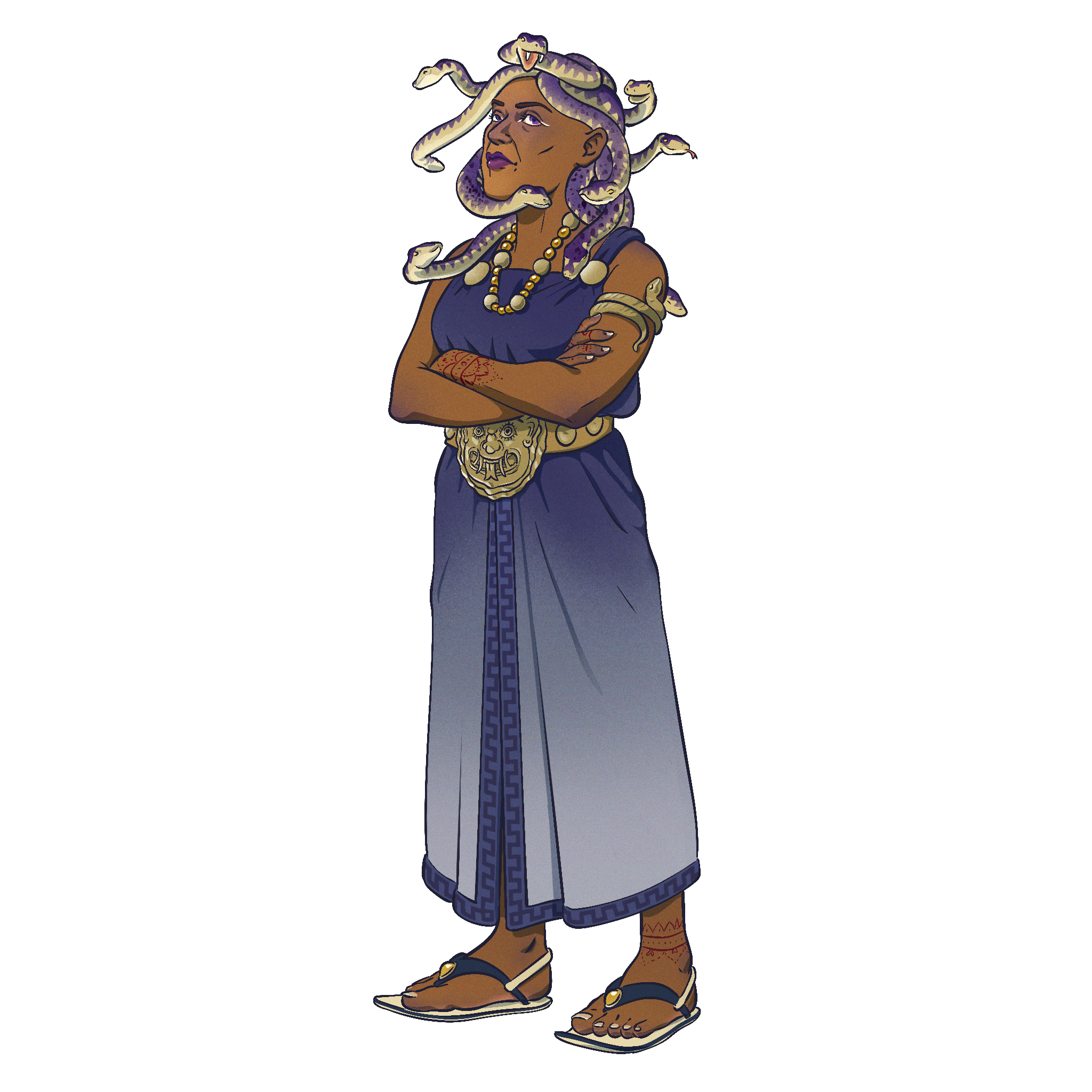
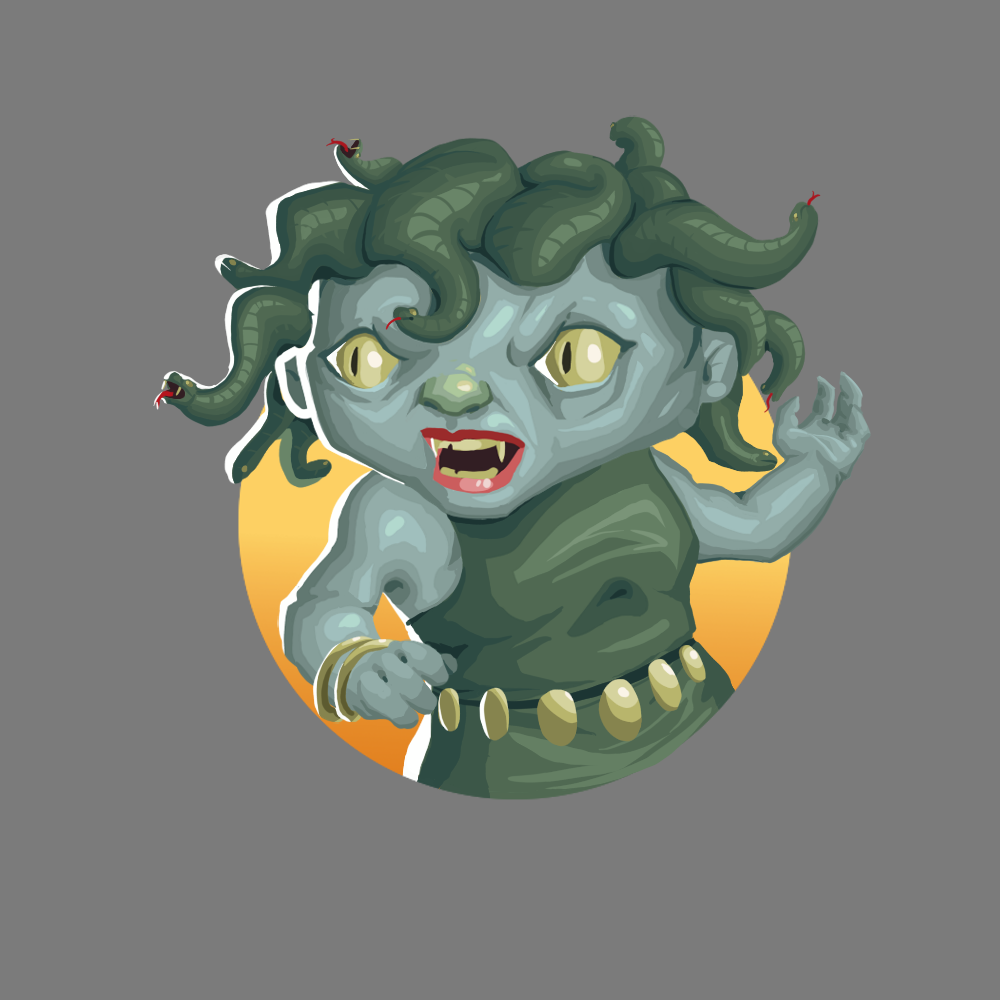
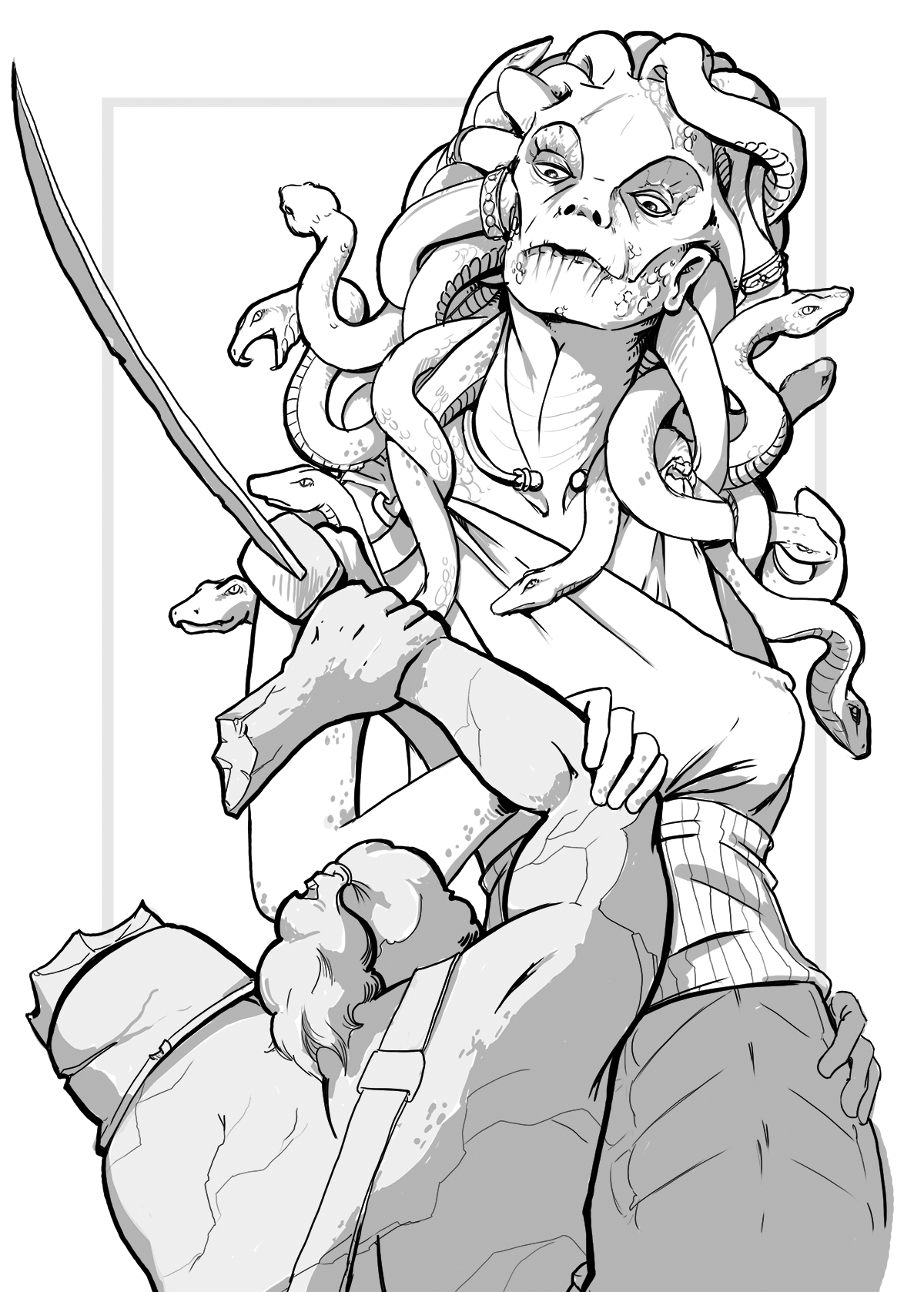
Human female with vipers for hair whose gaze turns victims to stone
A medusa appears to be a human female with vipers growing from her head instead of hair. The gaze of a medusa will petrify any creature who meets it unless a save vs. Petrification is made. In general, any creature surprised by the medusa will meet its gaze. Those who attempt to fight the monster while averting their eyes suffer penalties of -4 on attack rolls and -2 to AC. It is safe to view a medusa's reflection in a mirror or other reflective surface; anyone using a mirror to fight a medusa suffers a penalty of -2 to attack and no penalty to AC. If a medusa sees its own reflection, it must save vs. Petrification itself; a petrified medusa is no longer able to petrify others, but the face of a medusa continues to possess the power to petrify even after death otherwise. Medusae instinctively avoid mirrors or other reflective surfaces, even drinking with their eyes closed, but if an attacker can manage to surprise the monster with a mirror she may see her reflection. Further, the snakes growing from her head are poisonous (save vs. Poison or die in one turn). They attack as a group, not individually, once per round for 1d6 damage (plus the poison). A medusa often wears garments t
Actions/Abilities/Traits: Basic Fantasy
Actions/Abilities/Traits: D&D 5e
Actions/Abilities/Traits: D&D 5e
As deadly as they are ravishing, the serpent-haired medusas suffer an immortal curse brought on by their vanity. They lurk in quiet exile among the tumbled ruins of their former lives, surrounded by the petrified remains of past admirers and would-be heroes.
Immortal Splendor
Men and women who desire eternal youth, beauty, and adoration might pray to malicious gods, beg dragons for ancient magic, or seek out powerful archmages to fulfill their wishes. Others make sacrifices to demon lords or archdevils, offering all in exchange for this gift, oblivious to the curse that accompanies it. Those who strike such bargains gain physical beauty, restored youth, immortality, and the adoration of all who behold them, granting them the influence and power they so desire. However, after years of the living like a demigod among mortals, the price for their vanity and hubris is exacted, and they are forever transformed into medusas. A medusa's hair turns into a nest of venomous serpents, and all who gaze upon the medusa are petrified, becoming stone monuments to its corruption.
Medusa Lairs
Medusas live forever in seclusion, alienated from the world around them by their monstrous form and caprice. Their homes gradually fall into disrepair until they are little more than shadowy ruins covered with thorns and creepers, riddled with obstructions and hiding places. Foolhardy looters and adventurers who enter are often unaware of the medusa's presence until the creature is among them.
A medusa is subject to its own curse. By looking vainly on its reflection, it turns to stone as surely as any living mortal. As a result, a medusa destroys or removes any mirrors or reflective surfaces in its lair.
Medusas (often called gorgons on Theros) are closely associated with Pharika, the god of poison and medicine. Pharika has charged her favored servants with guarding secrets of life, health, and immortality that are too powerful to be known by those who lack the wisdom to use them properly. Those who approach a medusa with humility and worthy offerings might receive the creature's favor. The medusa might propose a dangerous quest to fetch some rare ingredient or legendary relic, promising to reward success with a bit of Pharika's knowledge. This information might lead to a cure for a plague, an alchemical breakthrough, or a secret of the cosmos.
Medusa
Snake-Haired Recluse with a Petrifying Gaze
With their hair of living snakes and their infamous petrifying gazes, medusas are hubristic creatures that inhabit sites of fallen glory. They often dwell beyond the fringes of civilization or travel in disguise, leaving trails of petrified victims. Some medusas dominate groups of monsters or criminals, controlling them with threats of petrified doom, while others recruit servants that are immune to being petrified, such as gargoyles and gorgons.
Medusas are born or created through preternatural circumstances. Roll on or choose a result from the Medusa Fates table to inspire what led to a medusa's creation.
Actions/Abilities/Traits: D&D 5e
Actions/Abilities/Traits: OSRIC
Actions/Abilities/Traits: OSRIC
Human female with vipers for hair whose gaze turns victims to stone
Medusæ resemble the similarly-named monster from Greek myth. They can bite with their snaky hair, inflicting the damage noted, in which case their target must save vs poison or die, but their more feared attack mode is their gaze, which petrifies any creature that looks into their eyes. The creature may attempt a save vs petrifaction to avoid this. One of the most effective weapons against a medusa is a mirror, for a medusa that sees her own reflection may be petrified herself if she fails her save. A character attempting to fight a medusa without looking at her must accept a penalty of -4 on his or her "to hit" rolls. Note that a medusa's gaze extends into nearby planes of existence, such as the ætheral or astral planes, and has full effect there.
Actions/Abilities/Traits: OSRIC
Actions/Abilities/Traits: Pathfinder 1e
Actions/Abilities/Traits: Pathfinder 1e
Actions/Abilities/Traits: Pathfinder 1e


grasslands, cave
very rare

forest, cave
very rare

mountain, cave
very rare


As deadly as they are ravishing, the serpent-haired medusas suffer an immortal curse brought on by their vanity. They lurk in quiet exile among the tumbled ruins of their former lives, surrounded by the petrified remains of past admirers and would-be heroes.
Immortal Splendor
Men and women who desire eternal youth, beauty, and adoration might pray to malicious gods, beg dragons for ancient magic, or seek out powerful archmages to fulfill their wishes. Others make sacrifices to demon lords or archdevils, offering all in exchange for this gift, oblivious to the curse that accompanies it. Those who strike such bargains gain physical beauty, restored youth, immortality, and the adoration of all who behold them, granting them the influence and power they so desire. However, after years of the living like a demigod among mortals, the price for their vanity and hubris is exacted, and they are forever transformed into medusas. A medusa's hair turns into a nest of venomous serpents, and all who gaze upon the medusa are petrified, becoming stone monuments to its corruption.
Medusa Lairs
Medusas live forever in seclusion, alienated from the world around them by their monstrous form and caprice. Their homes gradually fall into disrepair until they are little more than shadowy ruins covered with thorns and creepers, riddled with obstructions and hiding places. Foolhardy looters and adventurers who enter are often unaware of the medusa's presence until the creature is among them.
A medusa is subject to its own curse. By looking vainly on its reflection, it turns to stone as surely as any living mortal. As a result, a medusa destroys or removes any mirrors or reflective surfaces in its lair.
Medusas (often called gorgons on Theros) are closely associated with Pharika, the god of poison and medicine. Pharika has charged her favored servants with guarding secrets of life, health, and immortality that are too powerful to be known by those who lack the wisdom to use them properly. Those who approach a medusa with humility and worthy offerings might receive the creature's favor. The medusa might propose a dangerous quest to fetch some rare ingredient or legendary relic, promising to reward success with a bit of Pharika's knowledge. This information might lead to a cure for a plague, an alchemical breakthrough, or a secret of the cosmos.
Medusa
Snake-Haired Recluse with a Petrifying Gaze
With their hair of living snakes and their infamous petrifying gazes, medusas are hubristic creatures that inhabit sites of fallen glory. They often dwell beyond the fringes of civilization or travel in disguise, leaving trails of petrified victims. Some medusas dominate groups of monsters or criminals, controlling them with threats of petrified doom, while others recruit servants that are immune to being petrified, such as gargoyles and gorgons.
Medusas are born or created through preternatural circumstances. Roll on or choose a result from the Medusa Fates table to inspire what led to a medusa's creation.
Human female with vipers for hair whose gaze turns victims to stone
A medusa appears to be a human female with vipers growing from her head instead of hair. The gaze of a medusa will petrify any creature who meets it unless a save vs. Petrification is made. In general, any creature surprised by the medusa will meet its gaze. Those who attempt to fight the monster while averting their eyes suffer penalties of -4 on attack rolls and -2 to AC. It is safe to view a medusa's reflection in a mirror or other reflective surface; anyone using a mirror to fight a medusa suffers a penalty of -2 to attack and no penalty to AC. If a medusa sees its own reflection, it must save vs. Petrification itself; a petrified medusa is no longer able to petrify others, but the face of a medusa continues to possess the power to petrify even after death otherwise. Medusae instinctively avoid mirrors or other reflective surfaces, even drinking with their eyes closed, but if an attacker can manage to surprise the monster with a mirror she may see her reflection. Further, the snakes growing from her head are poisonous (save vs. Poison or die in one turn). They attack as a group, not individually, once per round for 1d6 damage (plus the poison). A medusa often wears garments t
Deadly creatures of a magical nature that look like women with writhing snakes in place of hair.
Human female with vipers for hair whose gaze turns victims to stone
Medusæ resemble the similarly-named monster from Greek myth. They can bite with their snaky hair, inflicting the damage noted, in which case their target must save vs poison or die, but their more feared attack mode is their gaze, which petrifies any creature that looks into their eyes. The creature may attempt a save vs petrifaction to avoid this. One of the most effective weapons against a medusa is a mirror, for a medusa that sees her own reflection may be petrified herself if she fails her save. A character attempting to fight a medusa without looking at her must accept a penalty of -4 on his or her "to hit" rolls. Note that a medusa's gaze extends into nearby planes of existence, such as the ætheral or astral planes, and has full effect there.

Illustrated Bestiary

Miko Arc
Justin Nichol
Mariana Ruiz Villarreal
 (8)
(8)


 (14)
(14)
The Monsters Know What They're Doing Dungeons And Dragons
OSE Encounter Activity Tables Any
The Daily Bestiary Pathfinder
Mythical Monsters Revisted Pathfinder
Mythic Adventures Pathfinder
Flee, Mortals D&D 5e
Monster Ecology Anthology D&D 5e
Dungeons And Dragons Essentials: Monster Vault D&D 4e
Scruffy Grognard's Monstrous Manual D&D 2e
AD&D Monster Manual AD&D 1e
Dragonbane Bestiary Dragonbane
Monsters Compendium Heroes Of Adventure