














To Draw Creatures From:



By the ox and the fox and the grizzly bear
The grumpy alligator and the hawk above
The sly old weasel and the turtle dove
- If caring for young, will defend to the death
- Generally averse to fire
| Alpaca | Camel | Llama | Long-necked Camel | Opinicus |
| Sage Camel |
 Actions/Abilities/Traits: D&D 5e
Actions/Abilities/Traits: D&D 5e
Actions/Abilities/Traits: OSRIC
Actions/Abilities/Traits: OSRIC
Actions/Abilities/Traits: D&D 5e
Actions/Abilities/Traits: D&D 5e
Actions/Abilities/Traits: D&D 5e
Actions/Abilities/Traits: OSRIC
Actions/Abilities/Traits: OSRIC
Irascible animals that are adapted to life in dry climates
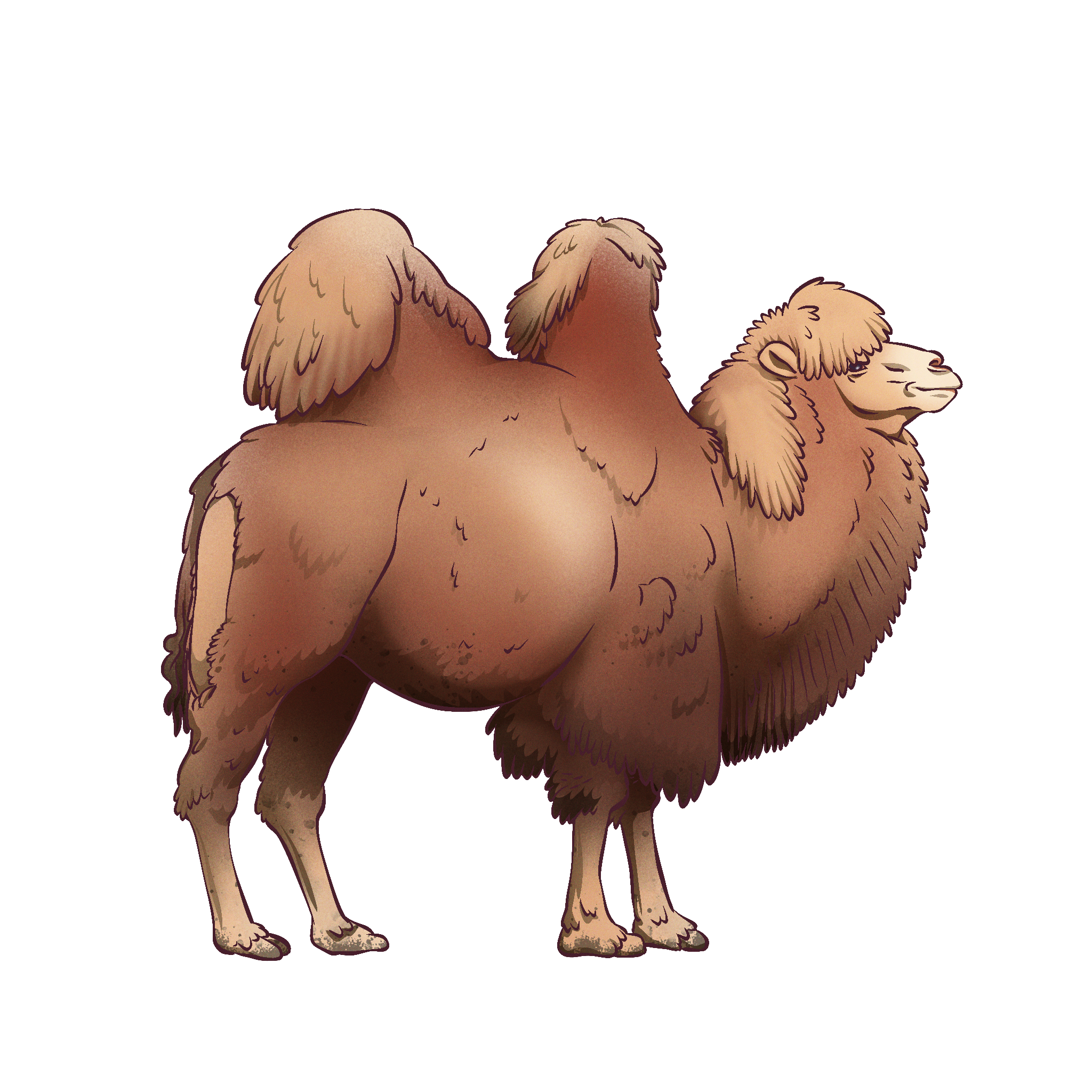
An ornery beast of burden, the camel comes in two types, both of which have the same stats in game terms. The dromedary has only one hump and prefers warm climates. The bactrian camel has two humps, is adaptable to a wider range of temperatures and environments, and moves 30-ft more slowly. Regardless of the type, all camels can be domesticated, can carry immense loads (up to 6,000 gp, although this will cut their movement in half). Between 4 and 5 thousand gp, speed is reduced to 60-ft. Their usual attack is a bite, but they will also spit (50%, with a 25% chance to blind for 1d3 rounds). Treasure: None
Actions/Abilities/Traits: OSRIC

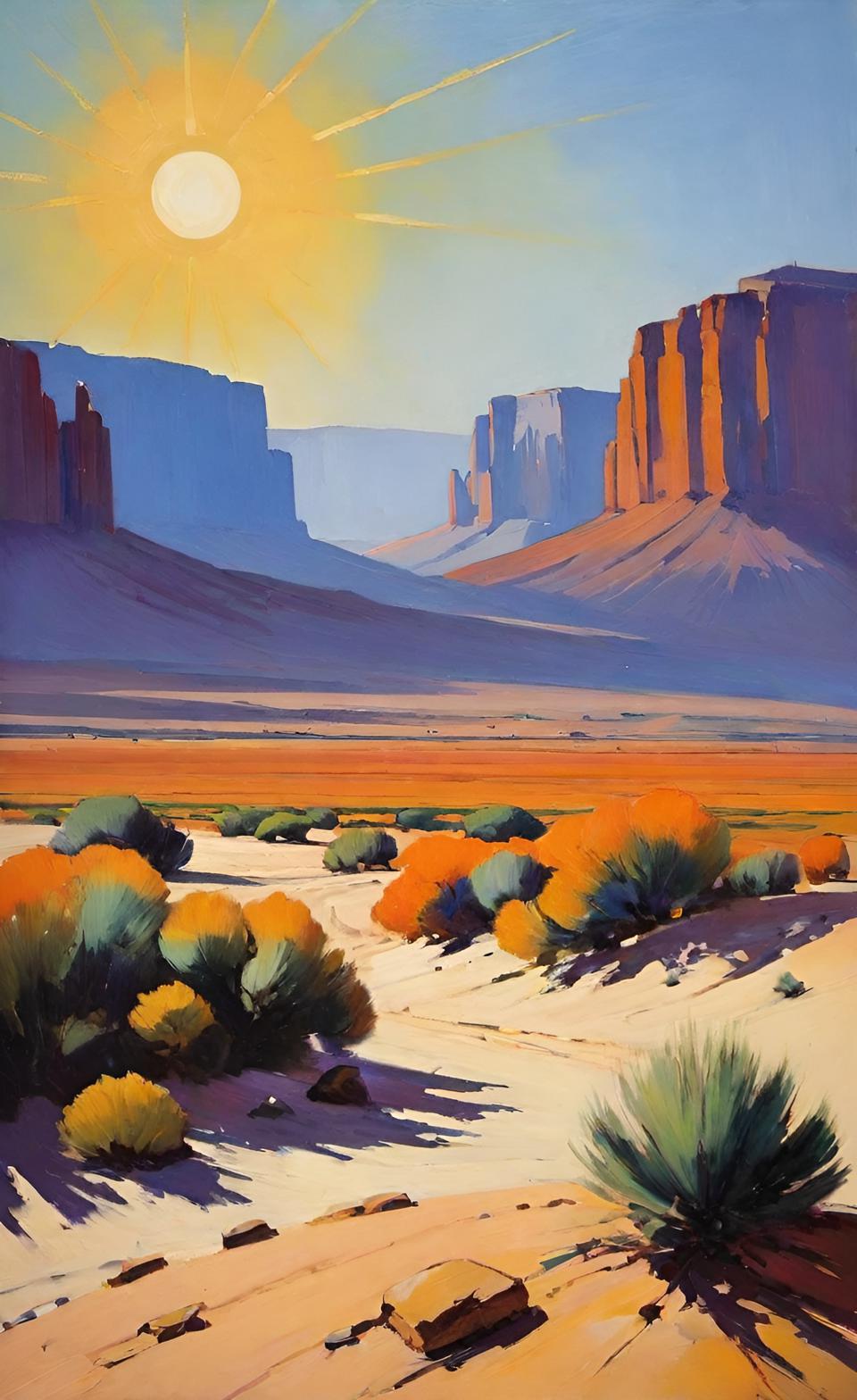
desert
common


Irascible animals that are adapted to life in dry climates. Often used for transportation in deserts.
Irascible animals that are adapted to life in dry climates
An ornery beast of burden, the camel comes in two types, both of which have the same stats in game terms. The dromedary has only one hump and prefers warm climates. The bactrian camel has two humps, is adaptable to a wider range of temperatures and environments, and moves 30-ft more slowly. Regardless of the type, all camels can be domesticated, can carry immense loads (up to 6,000 gp, although this will cut their movement in half). Between 4 and 5 thousand gp, speed is reduced to 60-ft. Their usual attack is a bite, but they will also spit (50%, with a 25% chance to blind for 1d3 rounds). Treasure: None

Illustrated Bestiary
 (10)
(10)



 (8)
(8)
Monstrosities Swords & Wizardry
Angry Golem D&D 5e
OSE Encounter Activity Tables Any
Pathfinder 1e Bestiary 2 Pathfinder
Pathfinder 2e Bestiary 3 Pathfinder
Monstrous Compendium: Al-Qadim D&D 2e
Hacklopedia Of Beasts Hackmaster v5