













To Draw Creatures From:



Your magic is strange and new
 Actions/Abilities/Traits: Basic Fantasy
Actions/Abilities/Traits: Basic Fantasy
Actions/Abilities/Traits: Basic Fantasy
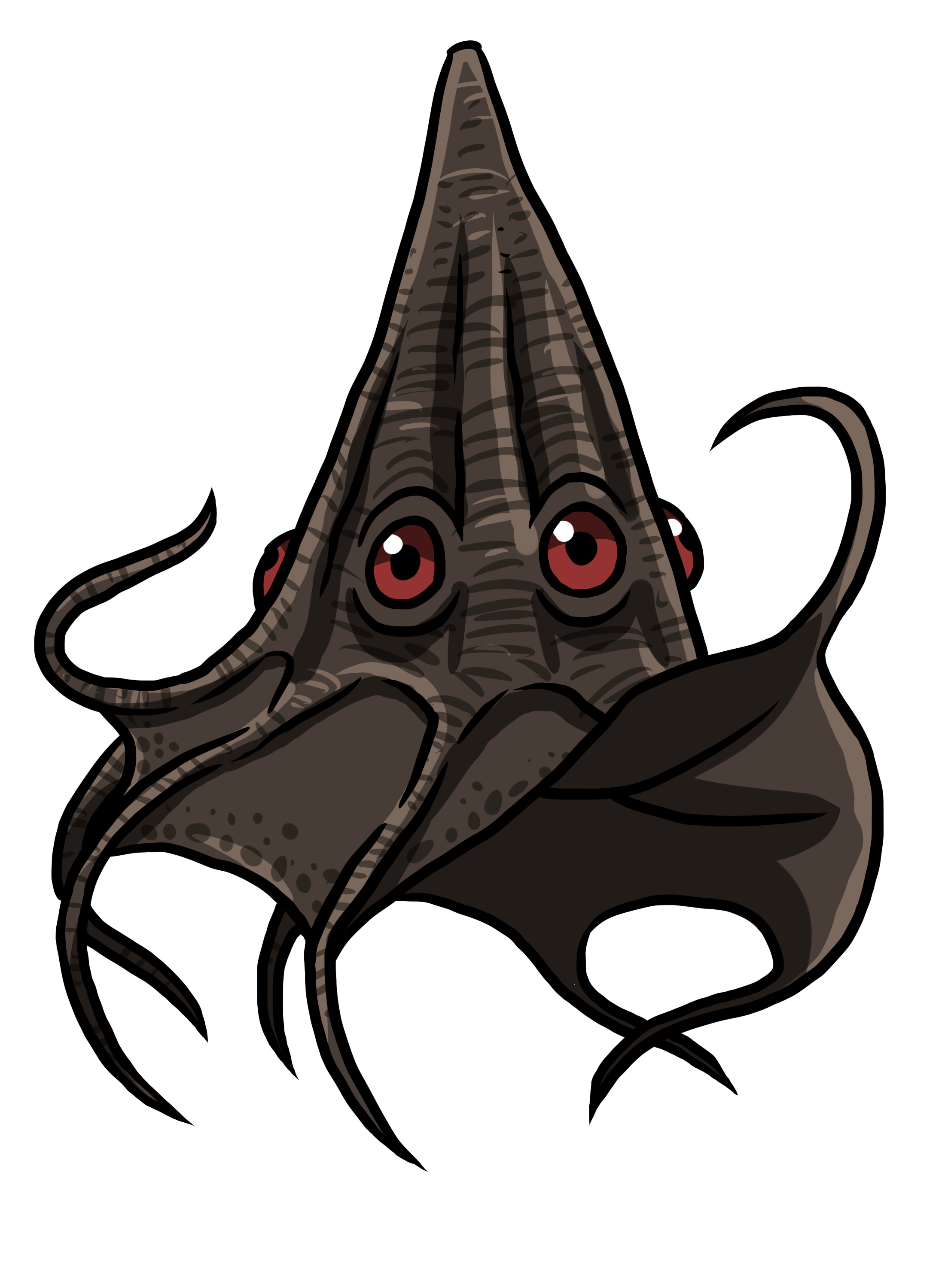
A cave-dwelling creature that resembles a stalactite and drops onto prey to suffocate them
While at rest, a Darkmantle looks much like a stalactite. Using a muscular 'foot', it attaches itself to the ceiling with its tentacles wrapped about its body. A darkmantle weighs about 30 pounds and can change its skin color to match the surrounding stone. It effectively has 90' Darkvision, achieved through a form of echolocation. Magical silence effectively blinds a darkmantle. Darkmantles drop from their hiding spots on the ceiling onto the head of their victims and wrap their tentacles around their preys head and neck to constrict and suffocate them, doing 1d4 points of damage per round. If the darkmantle misses its initial attack, it will attempt to fly back to its perch and try again. After successfully attacking, the darkmantle automatically inflicts 1d4 points of damage each round. While attached to an individual, a darkmantle takes half damage from attacks; the other half is inflicted upon the individual it covers.
Actions/Abilities/Traits: Basic Fantasy
Actions/Abilities/Traits: D&D 5e
Actions/Abilities/Traits: D&D 5e
These creatures cling to cavern ceilings, appearing to an unwary observer to be stalactites. In reality, they are small predators of the Netherworld. Flying octopi of a sort, darkmantles lead frugal lives, mainly hunting bats, lizards, and various arthropods. Driven by hunger or tricked by the appetizing size of a halfling, they may attack parties of adventurers. One must be mindful of group attacks, when several darkmantles simultaneously swoop at their prey to blind and suffocate them.
A darkmantle clings to cavern ceilings, remaining perfectly still as it waits for creatures to pass beneath it. From a distance, it can pass itself off as a stalactite or a lump of stone. Then it drops from the ceiling and unfurls, surrounding itself with magical darkness as it engulfs and crushes its prey.
Darkmantles are found throughout the Underdark, but they are equally common on the Shadowfell. Thriving in that dark realm, they fill an ecological niche similar to bats on the Material Plane. Intelligent creatures of the Shadowfell sometimes train darkmantles as guardians or companions.
Remind me again why we're on this quest?
Darkmantle
Ceiling-Clinging Ambush Predator
Unnatural subterranean hunters, darkmantles veil themselves in magical shadows and use their bizarre anatomies to disguise themselves as stalactites. When prey passes below, lurking darkmantles drop and unfurl their webbed tentacles, attempting to blind, suffocate, or crush their victims.
Darkmantles share similarities with piercers and ropers and often hunt near those monsters. Scholars have attempted to establish a shared origin or life cycle between those creatures, but their efforts are thwarted by those monsters' supernatural physiologies and deadly natures.
Just assume there's no such thing as a stalactite.
Actions/Abilities/Traits: D&D 5e
Actions/Abilities/Traits: Pathfinder 1e
Actions/Abilities/Traits: Pathfinder 1e
Actions/Abilities/Traits: Pathfinder 1e


desert, cave
uncommon

grasslands, cave
uncommon

forest, cave
uncommon

jungle, cave
uncommon

wetlands, cave
uncommon

taiga, cave
uncommon

mountain, cave
uncommon


These creatures cling to cavern ceilings, appearing to an unwary observer to be stalactites. In reality, they are small predators of the Netherworld. Flying octopi of a sort, darkmantles lead frugal lives, mainly hunting bats, lizards, and various arthropods. Driven by hunger or tricked by the appetizing size of a halfling, they may attack parties of adventurers. One must be mindful of group attacks, when several darkmantles simultaneously swoop at their prey to blind and suffocate them.
A darkmantle clings to cavern ceilings, remaining perfectly still as it waits for creatures to pass beneath it. From a distance, it can pass itself off as a stalactite or a lump of stone. Then it drops from the ceiling and unfurls, surrounding itself with magical darkness as it engulfs and crushes its prey.
Darkmantles are found throughout the Underdark, but they are equally common on the Shadowfell. Thriving in that dark realm, they fill an ecological niche similar to bats on the Material Plane. Intelligent creatures of the Shadowfell sometimes train darkmantles as guardians or companions.
Remind me again why we're on this quest?
Darkmantle
Ceiling-Clinging Ambush Predator
Unnatural subterranean hunters, darkmantles veil themselves in magical shadows and use their bizarre anatomies to disguise themselves as stalactites. When prey passes below, lurking darkmantles drop and unfurl their webbed tentacles, attempting to blind, suffocate, or crush their victims.
Darkmantles share similarities with piercers and ropers and often hunt near those monsters. Scholars have attempted to establish a shared origin or life cycle between those creatures, but their efforts are thwarted by those monsters' supernatural physiologies and deadly natures.
Just assume there's no such thing as a stalactite.
A cave-dwelling creature that resembles a stalactite and drops onto prey to suffocate them
While at rest, a Darkmantle looks much like a stalactite. Using a muscular 'foot', it attaches itself to the ceiling with its tentacles wrapped about its body. A darkmantle weighs about 30 pounds and can change its skin color to match the surrounding stone. It effectively has 90' Darkvision, achieved through a form of echolocation. Magical silence effectively blinds a darkmantle. Darkmantles drop from their hiding spots on the ceiling onto the head of their victims and wrap their tentacles around their preys head and neck to constrict and suffocate them, doing 1d4 points of damage per round. If the darkmantle misses its initial attack, it will attempt to fly back to its perch and try again. After successfully attacking, the darkmantle automatically inflicts 1d4 points of damage each round. While attached to an individual, a darkmantle takes half damage from attacks; the other half is inflicted upon the individual it covers.

Miko Arc
 (7)
(7)


 (6)
(6)
The Monsters Know What They're Doing Dungeons And Dragons
Pathfinder 1e Bestiary 1 Pathfinder
The Daily Bestiary Pathfinder
All Sorts Of Critters Pathfinder
Monster Ecology Anthology D&D 5e
Dragon Magazine D&D 2e/3e