














To Draw Creatures From:



Your magic is strange and new
Now feel the lizard's kiss
The reptile hissing in your ear
 Actions/Abilities/Traits: Basic Fantasy
Actions/Abilities/Traits: Basic Fantasy
Actions/Abilities/Traits: Basic Fantasy
A giant six-legged lizard-like monster that petrifies living creatures with its gaze
A basilisk is a giant six-legged lizard-like monster that petrifies living creatures with its gaze. A basilisk has dark brown, green, or black skin on its back and a pale yellow or white belly. Adults reach a body length of 5 to 7 feet with a tail of roughly equal length, and a weight of 250 to 400 pounds. There is no particular difference in size between males and females.
Actions/Abilities/Traits: Basic Fantasy
Actions/Abilities/Traits: D&D 5e
Actions/Abilities/Traits: D&D 5e
Basilisk hatchlings are crocodilian reptiles with scales ranging from gold to rust to black or emerald green. Fresh hatchlings are about the length of a human arm from head to tail, with six short, clawed legs and long rows of needle-like teeth. Full grown basilisks are feared throughout the realms for their ability to turn flesh to stone with their powerful gaze. Even as hatchlings, a nascent ability to briefly paralyze living creatures reveals itself when the hatchlings are startled or threatened.
Stone Matriarchs. Basilisk whelps are born in small clutches of no more than a dozen or so eggs, watched over by a basilisk matriarch. After laying her eggs, the matriarch slowly turns to stone, her petrified body deterring predators and providing a first meal full of vital nutrients for her hatchlings. Poachers that are able to get a old of an intact petrified matriarch can earn enough gold to live in luxury, particularly if they can seize her unhatched brood as well.
Golden Eggs. Despite the great danger involved, many of the realm's bravest and most ambitious hunters seek out the basilisk to prove themselves against its legend. Most fail, their hubris immortalized in stone in countless swamps and forests. A lucky few succeed against all odds and return, always with a tale and, in some rare cases, with eggs. Basilisk eggs are a rare treasure, invaluable both for the reagents they provide and because basilisks are smart enough to train. Tended from a young age, basilisks can be molded into fierce protectors, provided the trainer makes careful use of blinders.
Travelers sometimes find objects that look like pieces of remarkably lifelike stone carvings of wildlife. Missing parts appear to have been bitten off. Seasoned explorers regard such relics as warnings, knowing that the basilisk that created them is likely to be nearby.
Adaptable Predators
Basilisks thrive in arid, temperate, or tropical climates. They lair in caves or other sheltered sites. Most often, basilisks are encountered underground.
A basilisk born and raised in captivity can be domesticated and trained. Such a trained basilisk knows how to avoid meeting the eyes of those its master wishes to protect from its gaze, but it makes a daunting guardian beast. Because of this use, basilisk eggs are highly prized.
Gaze of Stone
Basilisks are ponderous for hunting creatures, but they needn't chase prey. Meeting a basilisk's supernatural gaze can be enough to affect a rapid transformation, transforming a victim into porous stone. Basilisks, with their strong jaws, are able to consume the stone. The stone returns to organic form in the basilisk's gullet.
Some alchemists are said to know how to process the basilisk's gullet and the fluids contained within. Properly handled, the gullet produces an oil that can return petrified creatures to flesh and life. Unfortunately for such a victim, any parts lost in stone form remain absent if the creature revives. Revivification using the oil is impossible if a vital part of the petrified creature, such as its head, is detached.
No one carves statues of frightened warriors. If you see one, keep your eyes closed and your ears open.
Travelers sometimes find objects that look like pieces of remarkably lifelike stone carvings of wildlife. Missing parts appear to have been bitten off. Seasoned explorers regard such relics as warnings, knowing that the basilisk that created them is likely to be nearby.
Adaptable Predators
Basilisks thrive in arid, temperate, or tropical climates. They lair in caves or other sheltered sites. Most often, basilisks are encountered underground.
A basilisk born and raised in captivity can be domesticated and trained. Such a trained basilisk knows how to avoid meeting the eyes of those its master wishes to protect from its gaze, but it makes a daunting guardian beast. Because of this use, basilisk eggs are highly prized.
Gaze of Stone
Basilisks are ponderous for hunting creatures, but they needn't chase prey. Meeting a basilisk's supernatural gaze can be enough to affect a rapid transformation, transforming a victim into porous stone. Basilisks, with their strong jaws, are able to consume the stone. The stone returns to organic form in the basilisk's gullet.
Some alchemists are said to know how to process the basilisk's gullet and the fluids contained within. Properly handled, the gullet produces an oil that can return petrified creatures to flesh and life. Unfortunately for such a victim, any parts lost in stone form remain absent if the creature revives. Revivification using the oil is impossible if a vital part of the petrified creature, such as its head, is detached.
No one carves statues of frightened warriors. If you see one, keep your eyes closed and your ears open.
Basilisk
Reptilian Guardian with a Petrifying Gaze
Basilisks are ponderous predators with eight clawed legs, crystalline spines, and mighty jaws. Rather than chasing prey, they use their supernatural gaze to turn creatures to stone and then consume these victims at their leisure. While basilisks are most comfortable in subterranean lairs, many are captured and kept by unscrupulous folk seeking guardians for their treasures.
The remains of Petrified creatures litter the area where a basilisk hunts. These might be mundane creatures or more unusual beings that had dire encounters with a basilisk. Roll on or choose a result from the Petrified Basilisk Victims table to inspire the statues that might appear in a basilisk's hunting grounds. There is a 50 chance that any of these statues are missing limbs or broken into pieces.
Rule 4: No one carves statues of frightened warriors. If you see one, keep your eyes closed and your ears open.
Actions/Abilities/Traits: D&D 5e
Actions/Abilities/Traits: OSRIC
Actions/Abilities/Traits: OSRIC
10' long, serpentine lizards. Unintelligent, but highly magical
Noting the basilisk's physiognomy, the wisest sages posit that it is hatched by a cock from the egg of a serpent, begetting an 8-legged anfractuous creature with a lizard-like head. The gaze of the basilisk is deadly, as any creature meeting its gaze must successfully save vs petrifaction or instantly be turned to stone. The gaze effects of the basilisk extend into both the astral and æthereal planes.
Actions/Abilities/Traits: OSRIC
Actions/Abilities/Traits: Pathfinder 1e
Actions/Abilities/Traits: Pathfinder 1e
Actions/Abilities/Traits: Pathfinder 1e








desert
rare

grasslands, savanna
rare

grasslands, prairie
rare

grasslands, steppe
rare
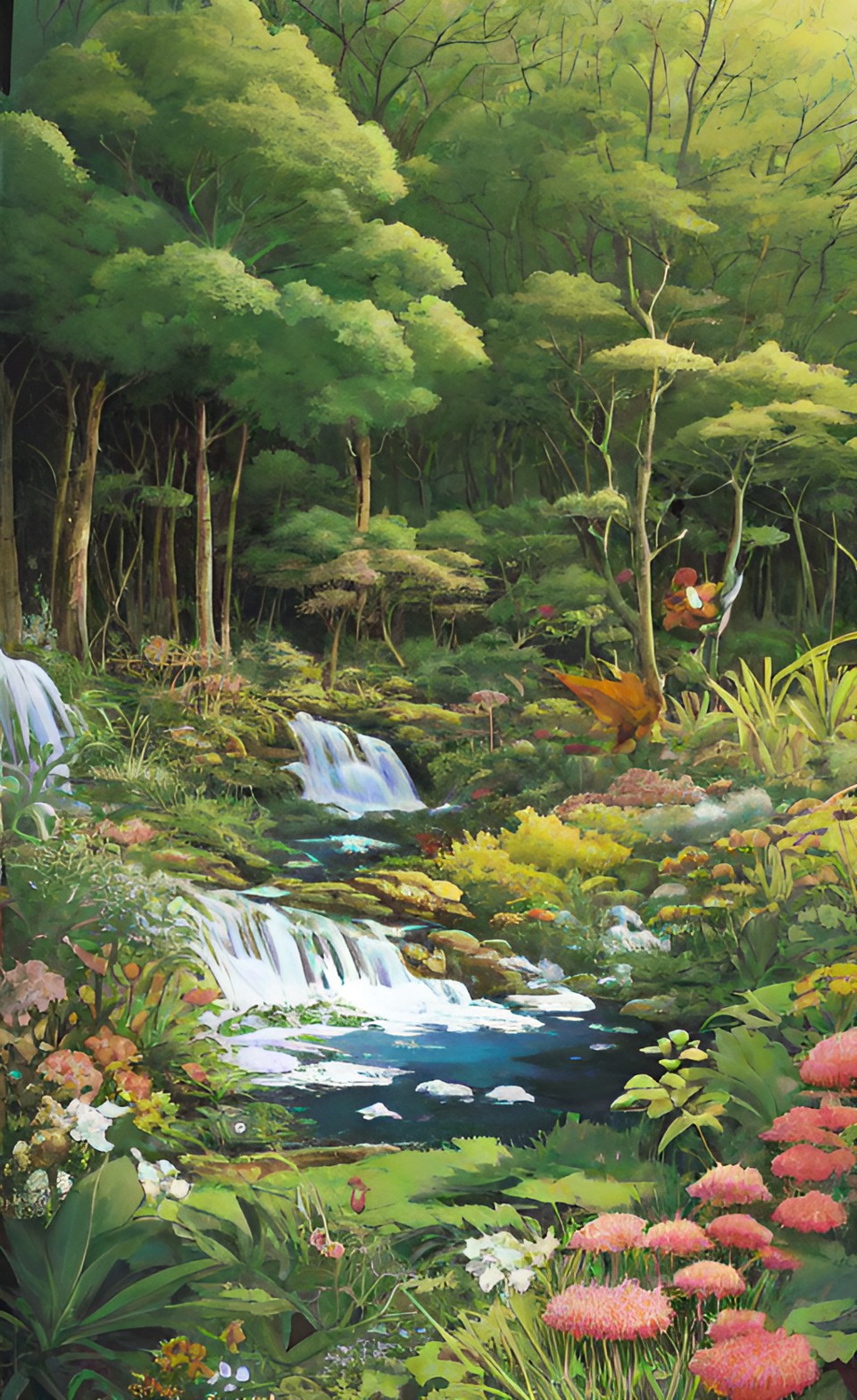
forest
rare

taiga
very rare

mountain, montane forest
rare

civilized, farmland
very rare

coast, tropical
rare
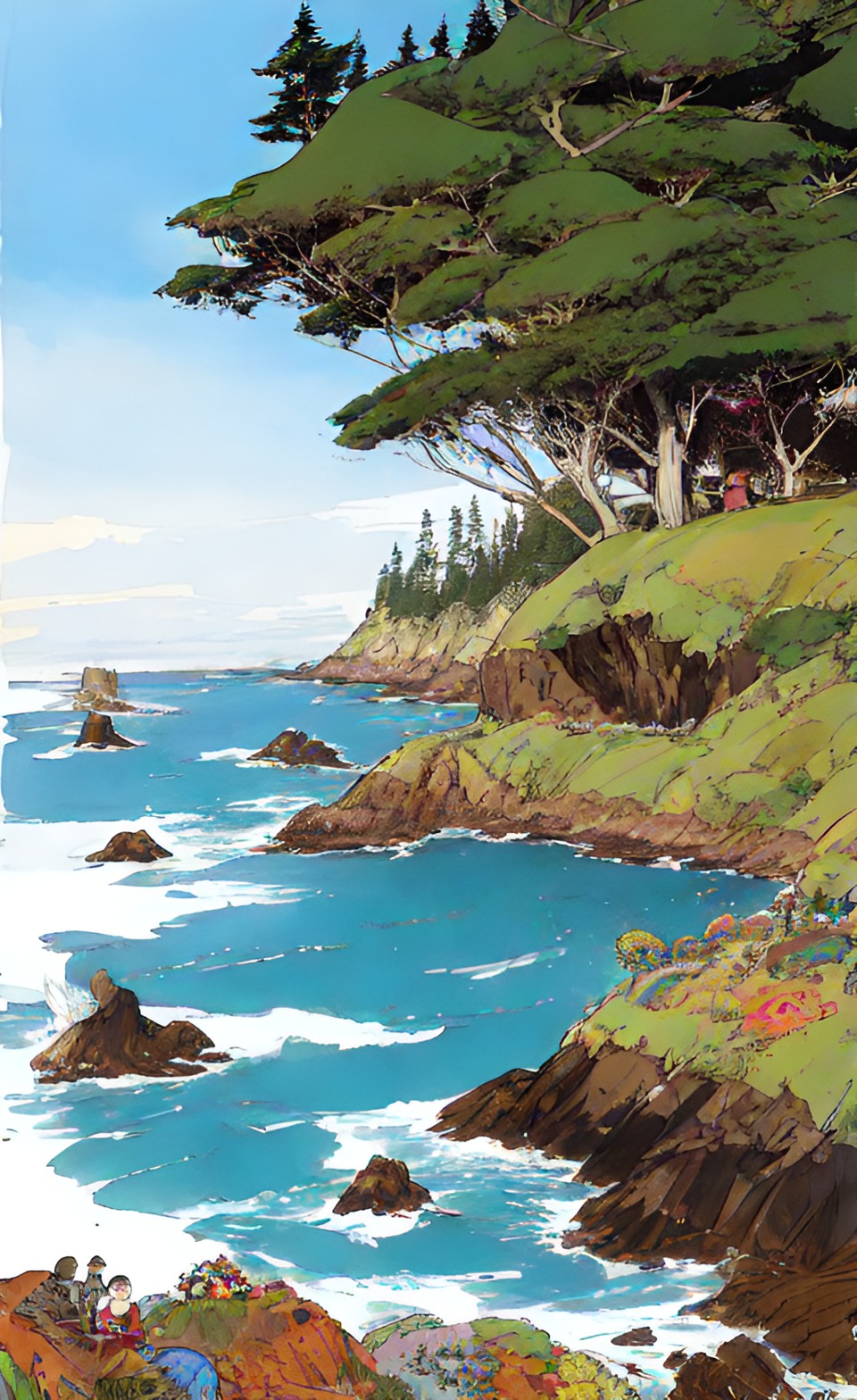
coast, temperate
rare

coast, subarctic
very rare





Basilisk hatchlings are crocodilian reptiles with scales ranging from gold to rust to black or emerald green. Fresh hatchlings are about the length of a human arm from head to tail, with six short, clawed legs and long rows of needle-like teeth. Full grown basilisks are feared throughout the realms for their ability to turn flesh to stone with their powerful gaze. Even as hatchlings, a nascent ability to briefly paralyze living creatures reveals itself when the hatchlings are startled or threatened.
Stone Matriarchs. Basilisk whelps are born in small clutches of no more than a dozen or so eggs, watched over by a basilisk matriarch. After laying her eggs, the matriarch slowly turns to stone, her petrified body deterring predators and providing a first meal full of vital nutrients for her hatchlings. Poachers that are able to get a old of an intact petrified matriarch can earn enough gold to live in luxury, particularly if they can seize her unhatched brood as well.
Golden Eggs. Despite the great danger involved, many of the realm's bravest and most ambitious hunters seek out the basilisk to prove themselves against its legend. Most fail, their hubris immortalized in stone in countless swamps and forests. A lucky few succeed against all odds and return, always with a tale and, in some rare cases, with eggs. Basilisk eggs are a rare treasure, invaluable both for the reagents they provide and because basilisks are smart enough to train. Tended from a young age, basilisks can be molded into fierce protectors, provided the trainer makes careful use of blinders.
Travelers sometimes find objects that look like pieces of remarkably lifelike stone carvings of wildlife. Missing parts appear to have been bitten off. Seasoned explorers regard such relics as warnings, knowing that the basilisk that created them is likely to be nearby.
Adaptable Predators
Basilisks thrive in arid, temperate, or tropical climates. They lair in caves or other sheltered sites. Most often, basilisks are encountered underground.
A basilisk born and raised in captivity can be domesticated and trained. Such a trained basilisk knows how to avoid meeting the eyes of those its master wishes to protect from its gaze, but it makes a daunting guardian beast. Because of this use, basilisk eggs are highly prized.
Gaze of Stone
Basilisks are ponderous for hunting creatures, but they needn't chase prey. Meeting a basilisk's supernatural gaze can be enough to affect a rapid transformation, transforming a victim into porous stone. Basilisks, with their strong jaws, are able to consume the stone. The stone returns to organic form in the basilisk's gullet.
Some alchemists are said to know how to process the basilisk's gullet and the fluids contained within. Properly handled, the gullet produces an oil that can return petrified creatures to flesh and life. Unfortunately for such a victim, any parts lost in stone form remain absent if the creature revives. Revivification using the oil is impossible if a vital part of the petrified creature, such as its head, is detached.
No one carves statues of frightened warriors. If you see one, keep your eyes closed and your ears open.
Travelers sometimes find objects that look like pieces of remarkably lifelike stone carvings of wildlife. Missing parts appear to have been bitten off. Seasoned explorers regard such relics as warnings, knowing that the basilisk that created them is likely to be nearby.
Adaptable Predators
Basilisks thrive in arid, temperate, or tropical climates. They lair in caves or other sheltered sites. Most often, basilisks are encountered underground.
A basilisk born and raised in captivity can be domesticated and trained. Such a trained basilisk knows how to avoid meeting the eyes of those its master wishes to protect from its gaze, but it makes a daunting guardian beast. Because of this use, basilisk eggs are highly prized.
Gaze of Stone
Basilisks are ponderous for hunting creatures, but they needn't chase prey. Meeting a basilisk's supernatural gaze can be enough to affect a rapid transformation, transforming a victim into porous stone. Basilisks, with their strong jaws, are able to consume the stone. The stone returns to organic form in the basilisk's gullet.
Some alchemists are said to know how to process the basilisk's gullet and the fluids contained within. Properly handled, the gullet produces an oil that can return petrified creatures to flesh and life. Unfortunately for such a victim, any parts lost in stone form remain absent if the creature revives. Revivification using the oil is impossible if a vital part of the petrified creature, such as its head, is detached.
No one carves statues of frightened warriors. If you see one, keep your eyes closed and your ears open.
Basilisk
Reptilian Guardian with a Petrifying Gaze
Basilisks are ponderous predators with eight clawed legs, crystalline spines, and mighty jaws. Rather than chasing prey, they use their supernatural gaze to turn creatures to stone and then consume these victims at their leisure. While basilisks are most comfortable in subterranean lairs, many are captured and kept by unscrupulous folk seeking guardians for their treasures.
The remains of Petrified creatures litter the area where a basilisk hunts. These might be mundane creatures or more unusual beings that had dire encounters with a basilisk. Roll on or choose a result from the Petrified Basilisk Victims table to inspire the statues that might appear in a basilisk's hunting grounds. There is a 50 chance that any of these statues are missing limbs or broken into pieces.
Rule 4: No one carves statues of frightened warriors. If you see one, keep your eyes closed and your ears open.
A giant six-legged lizard-like monster that petrifies living creatures with its gaze
A basilisk is a giant six-legged lizard-like monster that petrifies living creatures with its gaze. A basilisk has dark brown, green, or black skin on its back and a pale yellow or white belly. Adults reach a body length of 5 to 7 feet with a tail of roughly equal length, and a weight of 250 to 400 pounds. There is no particular difference in size between males and females.
10' long, serpentine lizards. Unintelligent, but highly magical. Dwell in caverns and twisted brambles.
10' long, serpentine lizards. Unintelligent, but highly magical
Noting the basilisk's physiognomy, the wisest sages posit that it is hatched by a cock from the egg of a serpent, begetting an 8-legged anfractuous creature with a lizard-like head. The gaze of the basilisk is deadly, as any creature meeting its gaze must successfully save vs petrifaction or instantly be turned to stone. The gaze effects of the basilisk extend into both the astral and æthereal planes.

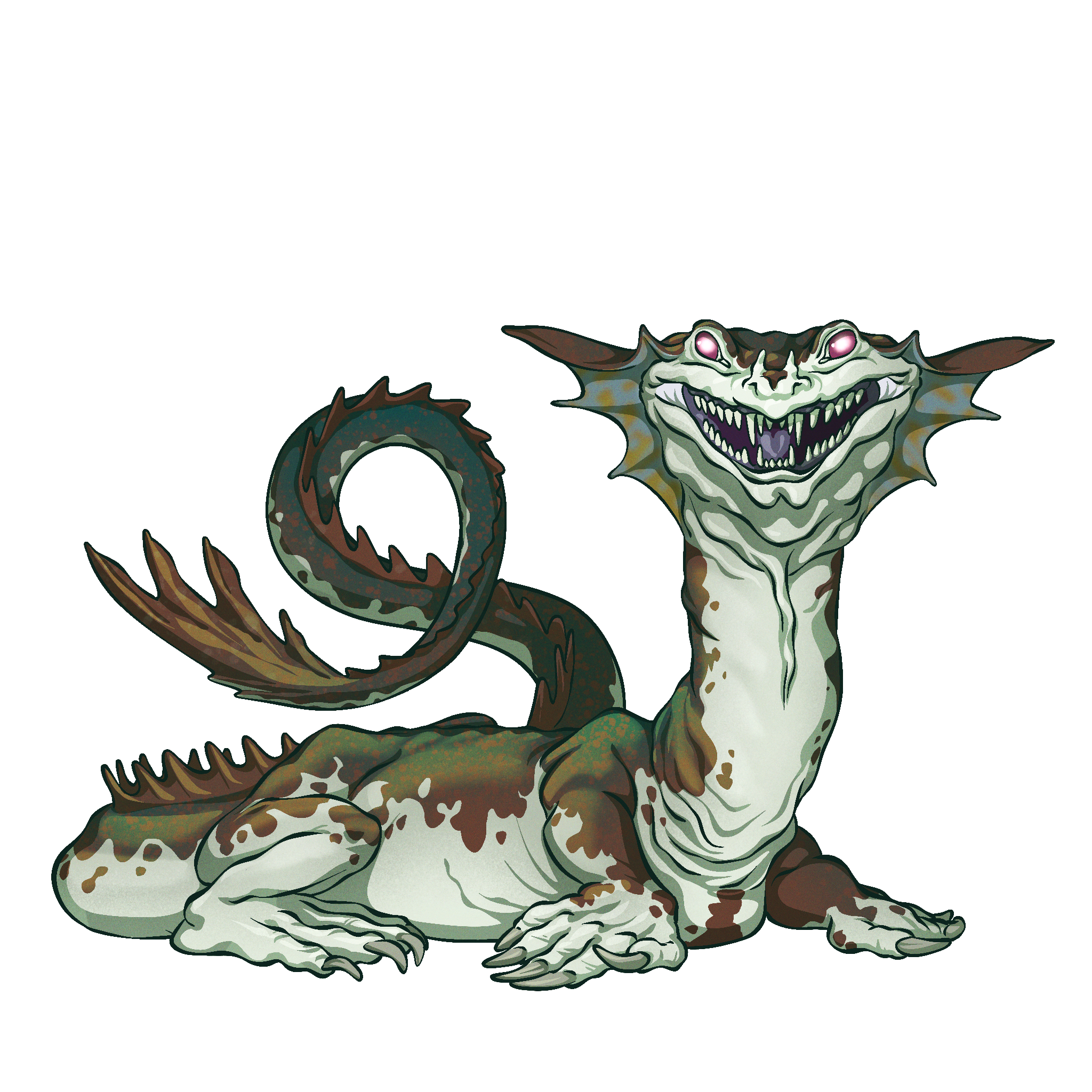
Illustrated Bestiary

Miko Arc
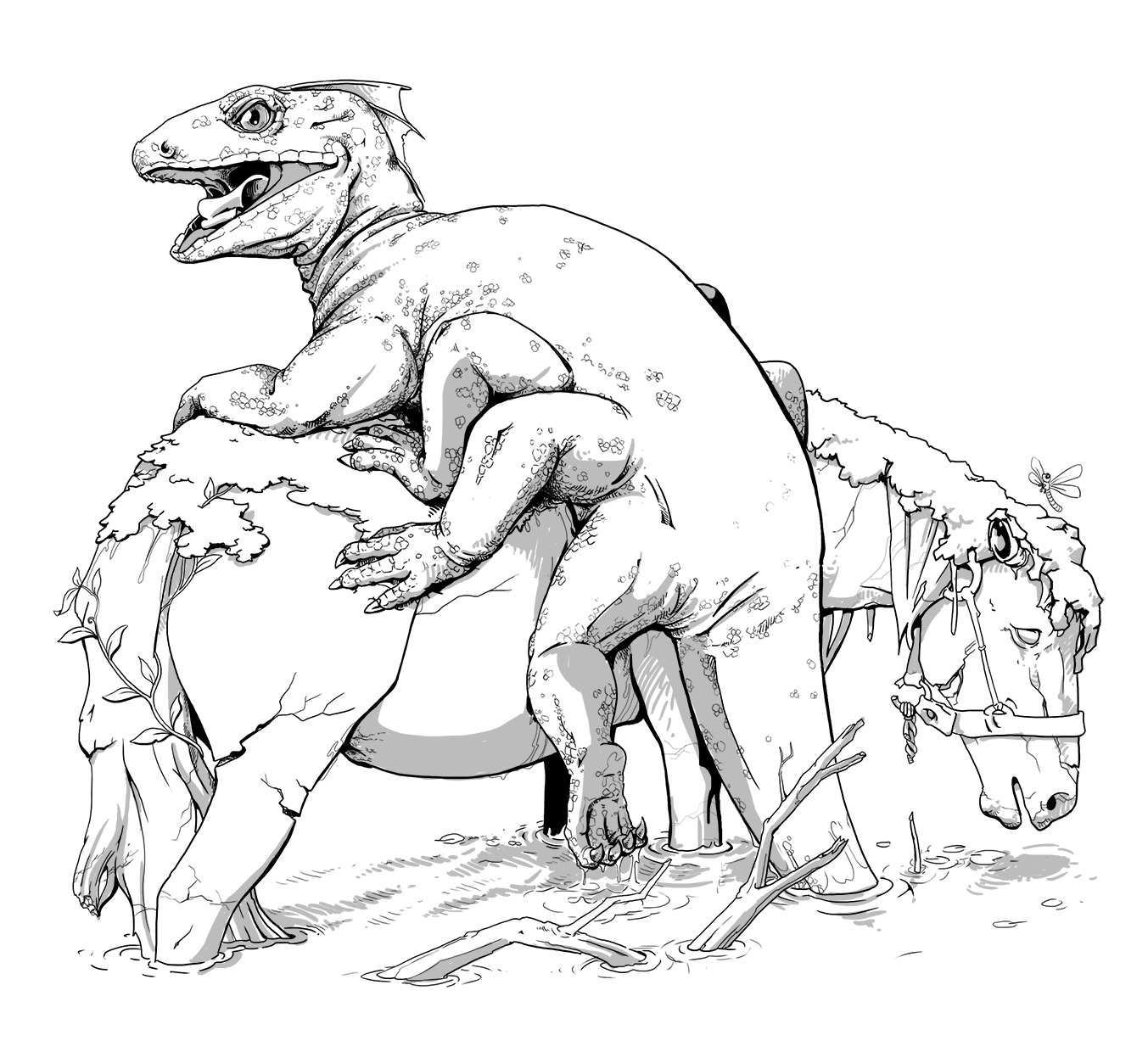
Mariana Ruiz Villarreal
 (23)
(23)




 (31)
(31)
The Monsters Know What They're Doing Dungeons And Dragons
Atlas Animalia Any
OSE Encounter Activity Tables Any
Pathfinder 1e Bestiary 1 Pathfinder
Pathfinder 2e Bestiary 1 Pathfinder
Tome Of Horrors Complete Pathfinder
The Daily Bestiary Pathfinder
All Sorts Of Critters Pathfinder
Exotic Encounters Pathfinder
Flee, Mortals D&D 5e
Monster Ecology Anthology D&D 5e
Dungeons And Dragons Essentials: Monster Vault D&D 4e
Scruffy Grognard's Monstrous Manual D&D 2e
AD&D Monster Manual AD&D 1e
AD&D Monster Manual II AD&D 1e
13th Age Bestiary 13th Age
Dragonlance Bestiary SAGA
Hacklopedia Of Beasts Hackmaster v5
Dragonbane Bestiary Dragonbane
Monsters Compendium Heroes Of Adventure
Monster Guide World Of Warcraft RPG
Godforsaken Cypher System
QUERP Bestiary QUERP
Fantasy Age Bestiary Fantasy Age
Mystara Adversary Compendium I Dragon Age
Iron Falcon Handbook Of Monsters OSR
Creatures Of Barsaive Earthdawn
Lairs And Encounters Adventurer, Conqueror, King
Baby Bestiary 1 Any