













To Draw Creatures From:



Your magic is strange and new
 Actions/Abilities/Traits: Basic Fantasy
Actions/Abilities/Traits: Basic Fantasy
Actions/Abilities/Traits: Basic Fantasy
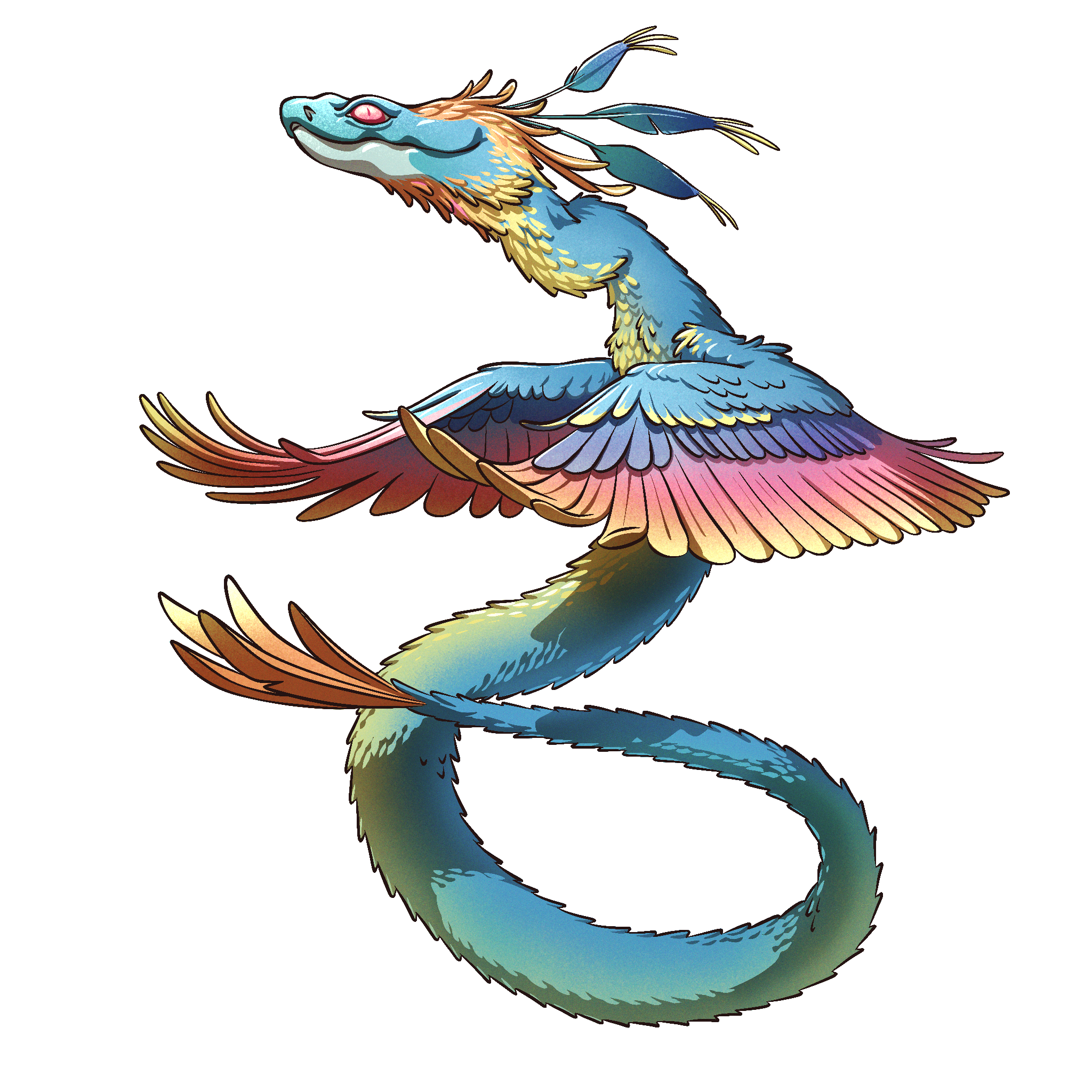
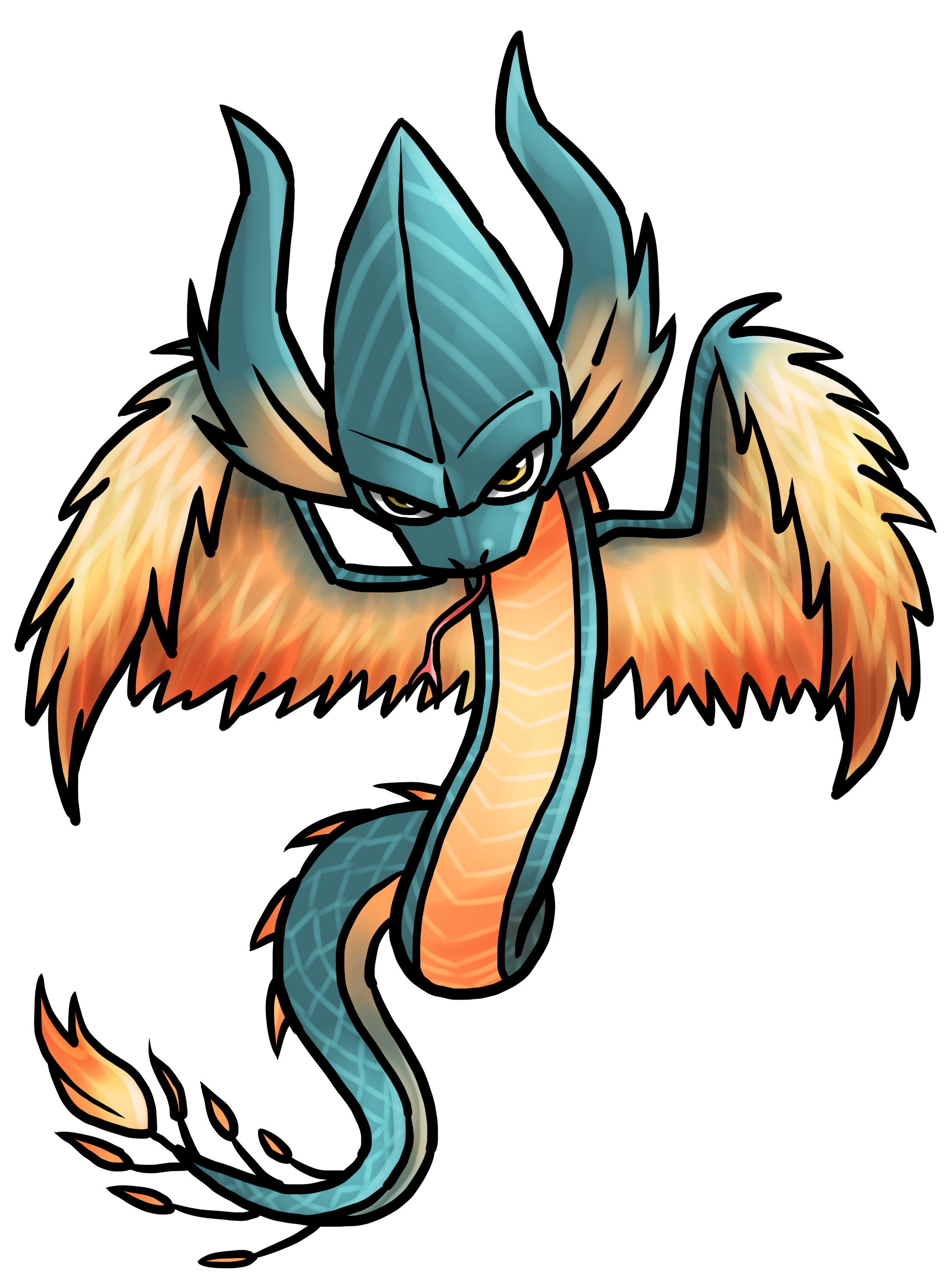
A powerful and legendary large serpent with feathered wings and shape-changing abilities
The powerful and legendary Couatl is a large serpent with a pair of feathered wings; since it is a shape-changer, one rarely sees this form. It can speak Common, communicate freely with reptiles and avians, or may use telepathic communication with intelligent creatures. A couatl has keen senses, including paranormal, which gives it the equivalent of Darkvision with a 90-foot range. A couatl is a benevolent force of goodness, and is rarely aggressive unless first attacked. When pressed into direct physical combat, a couatl will bite for 1d3 points of damage plus a deadly poison (save vs. Poison or die instantly). In addition, the couatl wraps about its foe, causing 2d4 points of damage from constriction each round. However, a couatl prefers to attack from the air, using spells or other powers. A couatl casts spells as either a Magic-user (40%), Cleric (40%), or sometimes as both (20%), equivalent to its hit dice (9th level). In addition, any couatl can, at will, cast **detect evil**, **detect invisibile**, **detect magic**, **mind reading**, and **read languages**. A couatl can also become invisible and insubstantial (incorporeal). In this form, it moves at half speed in any direc
Actions/Abilities/Traits: Basic Fantasy
Actions/Abilities/Traits: D&D 5e
Actions/Abilities/Traits: D&D 5e
Couatls are benevolent serpentine beings of great intellect and insight. Their brilliantly colored wings and gentle manner speak to their celestial origins.
Divine Caretakers
Couatls were created as guardians and caretakers by a benevolent god not worshiped since the dawn of time, and which is forgotten now by all but the couatls themselves. Most of the divine mandates given to these beings are long since fulfilled or failed. However, a number of couatls still watch over ancient power, await fulfillment of prophecy, or safeguard the heirs of creatures they once guided and protected. Regardless of a couatl's task, it prefers to remain hidden, revealing itself only as a last resort.
Truth Tellers
A couatl can't lie, but it can withhold information, answer questions vaguely, or allow others to jump to the wrong conclusions if doing so is necessary to protect something, to keep promises, or to hide the secret of its existence.
Ancient and Few
A couatl can live for ages without sustenance, even surviving without air, but these creatures can die of disease or the passage of time. A couatl can sense its end up to a century beforehand, but it has no insight into the manner of its demise. If a couatl has already accomplished what it set out to do, it accepts its fate. However, if its imminent death endangers the completion of its goals, it actively seeks out another couatl with which to produce offspring.
The mating ritual of couatls is a beautiful and elaborate dance of magic and light, which results in a gem-like egg from which a new couatl hatches. The parent that sought out the mate raises the newborn couatl and instructs it as to its duties, so that it can complete whatever task the parent leaves unfinished.
Couatl
Guardian Manifestation of the Divine
Embodiments of prophecy and protectors of divine secrets, couatls ensure fate unfolds as it should. They resemble serpents with rainbow wings, and each is a manifestation of a divine edict, a truth or fate that a righteous god decrees must hold true for all time. Most couatls appear in places of ancient power, where they guard hidden magic or ensure foretold acts do or don't come to pass. Rarely, couatls watch over communities or travel lands in disguise, interpreting omens or manipulating factors to set fate on its proper course.
Motivated by eternal mandates, couatls sometimes behave in inscrutable or antagonistic ways. They are inflexible and uncompromising, as their existences are fundamentally tied to their divine directives, but they harm other creatures only when absolutely necessary to achieve divine goals.
Each couatl goes through a period of renewal at the end of an age. In a couatl's lifecycle, an age might correspond to a celestial calendar or some divine chronology. Near the age's end, the couatl lays a wondrous, rainbow-hued egg. When the age ends, the couatl dies. For a period—perhaps a single day, perhaps until an annual solar event—the couatl's work is unattended. Once this time passes, the same couatl that laid the egg hatches from it, fully grown and renewed to serve for another age.
Actions/Abilities/Traits: D&D 5e
Actions/Abilities/Traits: OSRIC
Actions/Abilities/Traits: OSRIC
A powerful and legendary large serpent with feathered wings and shape-changing abilities
Couatl are a race of brightly feathered serpents with wings. They are rarely encountered and if so, would be in a remote tropical environment. They are often treated as gods by those who serve them, however couatl rarely meddle in human events. They can polymorph themselves, turn æthereal, and cast magic. Most are equal to a 5th level mage (45%), but a few are 7th level clerics (35%). There are a handful of couatl (20%) who cast as a magic user/cleric. In combat a couatl attacks with its bite that causes 1d3 damage and the victim must save vs poison or die. A couatl can also constrict with its body. A successful attack means the beast has grabbed its victim causing 2d4 damage, with an additional 2d4 damage each round until one or the other is dead.
Actions/Abilities/Traits: OSRIC
Actions/Abilities/Traits: Pathfinder 1e
Actions/Abilities/Traits: Pathfinder 1e
Spells Known (CL 9th)
Actions/Abilities/Traits: Pathfinder 1e




jungle
very rare

jungle, aerial
very rare

coast, tropical
very rare


Couatls are benevolent serpentine beings of great intellect and insight. Their brilliantly colored wings and gentle manner speak to their celestial origins.
Divine Caretakers
Couatls were created as guardians and caretakers by a benevolent god not worshiped since the dawn of time, and which is forgotten now by all but the couatls themselves. Most of the divine mandates given to these beings are long since fulfilled or failed. However, a number of couatls still watch over ancient power, await fulfillment of prophecy, or safeguard the heirs of creatures they once guided and protected. Regardless of a couatl's task, it prefers to remain hidden, revealing itself only as a last resort.
Truth Tellers
A couatl can't lie, but it can withhold information, answer questions vaguely, or allow others to jump to the wrong conclusions if doing so is necessary to protect something, to keep promises, or to hide the secret of its existence.
Ancient and Few
A couatl can live for ages without sustenance, even surviving without air, but these creatures can die of disease or the passage of time. A couatl can sense its end up to a century beforehand, but it has no insight into the manner of its demise. If a couatl has already accomplished what it set out to do, it accepts its fate. However, if its imminent death endangers the completion of its goals, it actively seeks out another couatl with which to produce offspring.
The mating ritual of couatls is a beautiful and elaborate dance of magic and light, which results in a gem-like egg from which a new couatl hatches. The parent that sought out the mate raises the newborn couatl and instructs it as to its duties, so that it can complete whatever task the parent leaves unfinished.
Couatl
Guardian Manifestation of the Divine
Embodiments of prophecy and protectors of divine secrets, couatls ensure fate unfolds as it should. They resemble serpents with rainbow wings, and each is a manifestation of a divine edict, a truth or fate that a righteous god decrees must hold true for all time. Most couatls appear in places of ancient power, where they guard hidden magic or ensure foretold acts do or don't come to pass. Rarely, couatls watch over communities or travel lands in disguise, interpreting omens or manipulating factors to set fate on its proper course.
Motivated by eternal mandates, couatls sometimes behave in inscrutable or antagonistic ways. They are inflexible and uncompromising, as their existences are fundamentally tied to their divine directives, but they harm other creatures only when absolutely necessary to achieve divine goals.
Each couatl goes through a period of renewal at the end of an age. In a couatl's lifecycle, an age might correspond to a celestial calendar or some divine chronology. Near the age's end, the couatl lays a wondrous, rainbow-hued egg. When the age ends, the couatl dies. For a period—perhaps a single day, perhaps until an annual solar event—the couatl's work is unattended. Once this time passes, the same couatl that laid the egg hatches from it, fully grown and renewed to serve for another age.
A powerful and legendary large serpent with feathered wings and shape-changing abilities
The powerful and legendary Couatl is a large serpent with a pair of feathered wings; since it is a shape-changer, one rarely sees this form. It can speak Common, communicate freely with reptiles and avians, or may use telepathic communication with intelligent creatures. A couatl has keen senses, including paranormal, which gives it the equivalent of Darkvision with a 90-foot range. A couatl is a benevolent force of goodness, and is rarely aggressive unless first attacked. When pressed into direct physical combat, a couatl will bite for 1d3 points of damage plus a deadly poison (save vs. Poison or die instantly). In addition, the couatl wraps about its foe, causing 2d4 points of damage from constriction each round. However, a couatl prefers to attack from the air, using spells or other powers. A couatl casts spells as either a Magic-user (40%), Cleric (40%), or sometimes as both (20%), equivalent to its hit dice (9th level). In addition, any couatl can, at will, cast **detect evil**, **detect invisibile**, **detect magic**, **mind reading**, and **read languages**. A couatl can also become invisible and insubstantial (incorporeal). In this form, it moves at half speed in any direc
A powerful and legendary large serpent with feathered wings and shape-changing abilities
Couatl are a race of brightly feathered serpents with wings. They are rarely encountered and if so, would be in a remote tropical environment. They are often treated as gods by those who serve them, however couatl rarely meddle in human events. They can polymorph themselves, turn æthereal, and cast magic. Most are equal to a 5th level mage (45%), but a few are 7th level clerics (35%). There are a handful of couatl (20%) who cast as a magic user/cleric. In combat a couatl attacks with its bite that causes 1d3 damage and the victim must save vs poison or die. A couatl can also constrict with its body. A successful attack means the beast has grabbed its victim causing 2d4 damage, with an additional 2d4 damage each round until one or the other is dead.

Illustrated Bestiary
Miko Arc
 (16)
(16)


 (15)
(15)
The Monsters Know What They're Doing Dungeons And Dragons
Angry Golem D&D 5e
Atlas Animalia Any
Pathfinder 1e Bestiary 1 Pathfinder
Pathfinder 2e Bestiary 3 Pathfinder
The Daily Bestiary Pathfinder
Mythic Monster Manual v1 Pathfinder
Mythical Monsters Revisted Pathfinder
Exotic Encounters Pathfinder
Latin American Monsters D&D 5e
Monster Ecology Anthology D&D 5e
Scruffy Grognard's Monstrous Manual D&D 2e
AD&D Monster Manual AD&D 1e
13th Age Bestiary 13th Age
Baby Bestiary 1 Any