











To Draw Creatures From:



Your magic is strange and new
| Boiuna | Carrion Golem | Catoblepas | Charfiend | Fordorran |
| Ghast | Ghonhatine | Giant Skunk | Globster | Gruffan |
| Hezrou | Kezai | Otyugh | Tamazulim | Troglodyte |
| Witherstench | Zevgavizeb |
 Actions/Abilities/Traits: Basic Fantasy
Actions/Abilities/Traits: Basic Fantasy
Actions/Abilities/Traits: Basic Fantasy
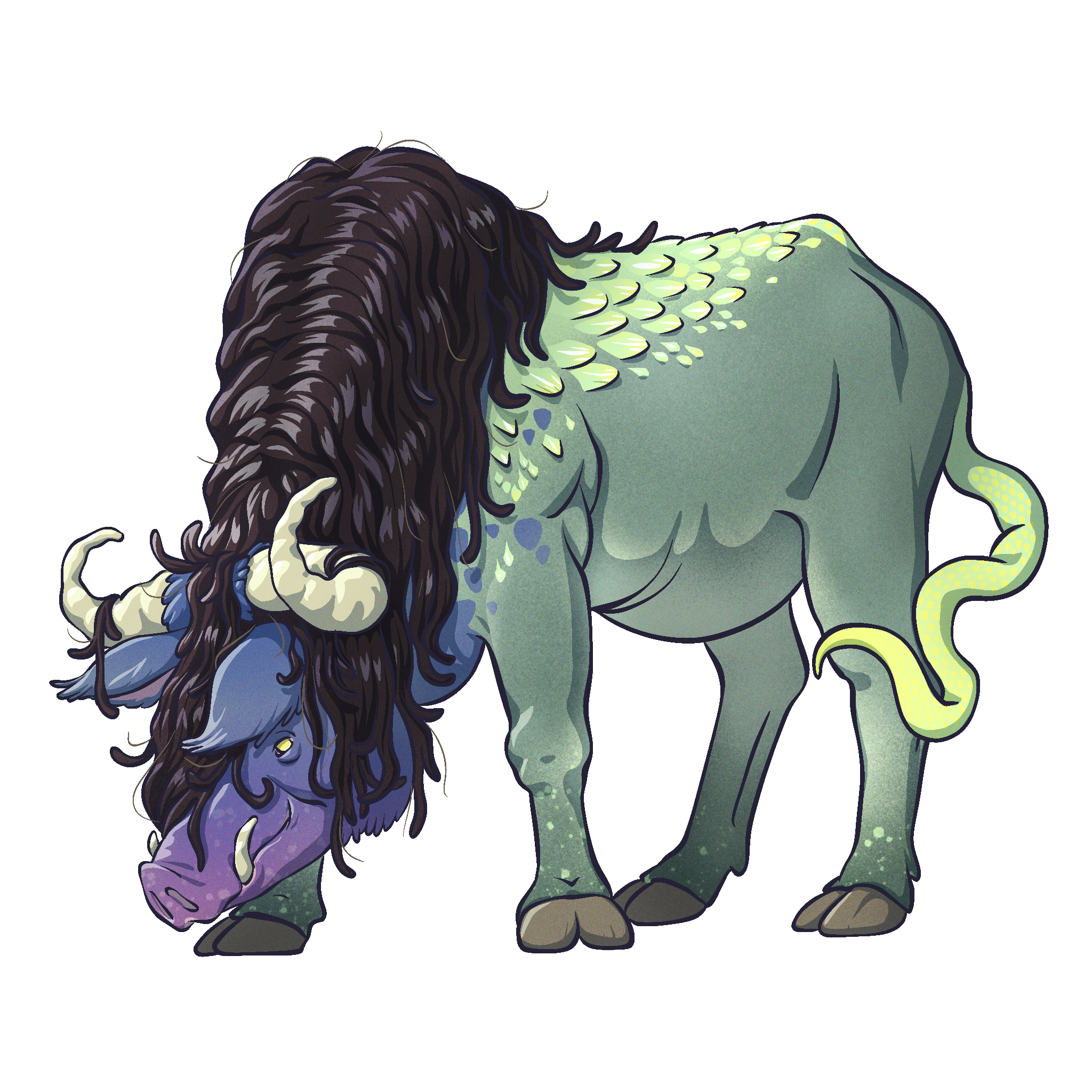
A fantastically ugly creature with a warthog-like face and body, a long neck, and a powerful tail ending in a bone club
A Catoblepas is a fantastically ugly creature with a warthog-like face and body, a long neck, and a powerful tail ending in a bone club similar to an ankylosaurus. All told it is about 10 feet long and weighs 700 pounds. A catoblepas prefers to be left alone to stew in its misery, but if threatened it will attempt to ward away attackers with its tail.
Actions/Abilities/Traits: Basic Fantasy
Actions/Abilities/Traits: D&D 5e
Actions/Abilities/Traits: D&D 5e
The catoblepas is an aggressive beast at the best of times, willing to knock down trees, fences, even small houses to eat whatever it finds interesting, be that meal plant or animal or human being. Though it prefers swamps, the catoblepas has been known to forage in plains and forests for short periods before returning to the buoyant support of water and mud. Few creatures linger near a catoblepas's feeding ground because of the monster's bad temper and poisonous breath, and only rot-loving predators such as oozes or exceptionally large otyughs have any interest in hunting them.
A catoblepas' primary motivation is hunting and exerting its dominance over lesser creatures in its territory. Easily detected by its foul odor, the creature tolerates the presence of wild animals, humanoid tribes, and even predators that it can bully as long as these things flee or act submissive when the poisonous brute lumbers into view. The catoblepas is known to engage in physical battles with other Large swamp creatures such as crocodiles or even froghemoths. Some humanoid tribes claim to know techniques to domesticate a catoblepas for use as a guard animal, but the monster's intractable nature and not insignificant intelligence almost certainly means magic is involved, as the creature has little need for alliances and can wipe out entire villages with its breath. Some have been known to use their breath underwater, creating a churning cloud of bubbles that kills fish in the area and starves out other creatures.
A catoblepas's sense of smell is blunted by its own ungodly stench, and it can't easily recognize rival odors such as skunk musk (though this provides the beast no immunity to odor-based effects from other creatures).
A catoblepas is 15 feet long and weighs 2,200 pounds.
The catoblepas is as loathsome as the vile swamplands in which it lives, a conglomeration of bloated buffalo, dinosaur, warthog, and hippopotamus parts. Despite its ungainly physiology, a catoblepas resembles a natural animal in its behavior, ambling through its marshy home, munching choice vegetation, eating the occasional bit of carrion, and wallowing in mire. A catoblepas might be found with the one mate it chooses for life and, on occasion, with a calf. A catoblepas attacks anyone that moves too close, especially if guarding its young.
A catoblepas's stink, like the stench of death mixed with swamp gas and skunk musk, gives it away as being much more ghastly than its appearance suggests. When it is on the attack, a catoblepas reveals the extent of its horrific nature. The creature's serpentine neck has trouble lifting its head, but one glare from its bloodshot eyes can rot flesh. At the end of its tail is a club that can rattle body and soul if it strikes true, leaving a victim unable to act while the catoblepas feasts on its body.
Blighted Territory
A catoblepas's nature as a creature of disease and decay brings out similar characteristics in the creature's swampy habitat. Such a wetland becomes gloomy, tangled, and more fetid than it was before. Beneficial qualities of the environment, such as healing herbs and clean water, become degraded, and swamp gases take on a hint of the catoblepas's foulness. Animals in the area are more aggressive and liable to be diseased. Degenerate creatures are likely to take up residence near a catoblepas's territory, as are those seeking to avoid notice.
Catoblepas in Folklore
Ordinary folk rarely see a catoblepas, but the creature has such a feared reputation that stories about it are ingrained in the popular culture. Any rumor of a catoblepas taking up residence nearby is taken to be a bad omen, even if the rumor is proven false. In some lands, the silhouette of a catoblepas, with its tail extended over its body and its head held low, is a baleful heraldic figure signifying death or doom.
Sages say that gods of pestilence and rot created catoblepases as embodiments of their influence, while other stories link them to misfortune. Some such tales claim that swamp-dwelling hags tend catoblepases like cattle, drinking the monsters' milk and using them as guardians or pets. Other legends say that those of impure heart can tame a catoblepas and whisper of malevolent warlocks and wicked knights who ride them into battle.
The catoblepas is as loathsome as the vile swamplands in which it lives. Like such wastelands, this conglomeration of bloated buffalo, dinosaur, warthog, and hippopotamus parts has few redeeming qualities. Few travelers willingly traverse the territory of a catoblepas.
Animalistic Nature
Despite their ungainly physiology, catoblepases resemble natural beasts. A catoblepas behaves much like an animal, too, ambling through its marshy home, munching choice vegetation, eating the occasional bit of carrion, and wallowing in mire. A catoblepas might be found with the one mate it chooses for life and, on occasion, a calf. Especially if it's guarding its young, a catoblepas attacks anyone that moves too close.
Stench of Death
A catoblepas's stink, like that of death mixed with swamp gas and skunk musk, gives it away as being much more ghastly than its appearance suggests. When it is on the attack, a catoblepas reveals the extent of its horrific nature. The creature's serpentine neck has trouble lifting its head, but one glare from its bloodshot eyes can rot flesh. At the end of its tail is a club that can rattle body and soul if it strikes true, leaving a victim unable to act. If the target of its attacks dies, the catoblepas feasts on the fresh remains.
Blighted Territory
A catoblepas's nature as a creature of disease and decay brings out similar characteristics in the creature's swampy habitat. Such a wetland becomes gloomy, tangled, and more fetid than it was before. Beneficial qualities of the environment, such as healing herbs and clean water, diminish when a catoblepas lives nearby. Swamp gases have a hint of the catoblepas's foulness to them. Animals in the area are more aggressive and liable to be diseased. Degenerate creatures are likely to take up residence near a catoblepas's territory, as are those seeking to avoid notice.
Sinister Folklore
Ordinary folk rarely see a catoblepas, but the creature has such a feared reputation that stories about it are ingrained in the popular culture. Any rumor of a catoblepas taking up residence nearby is taken to be a bad omen, even if the rumor is proven false. The silhouette of a catoblepas, with its tail extended over its body and its head held low, is a baleful heraldic figure signifying death or doom.
Sages say that gods of pestilence and rot created catoblepases as embodiments of their influence. Whatever the origin of the creature, stories link the catoblepas to misfortune, and many of these yarns have elements of truth. Some such tales claim that hags tend catoblepases like cattle, and that a swamp that contains a catoblepas might also be home to a hag that drinks the monster's milk. Although a particular catoblepas might not be linked to a hag, a coven of hags might keep one or more of these beasts as guardians or pets. Other legends say that those of impure heart can tame a catoblepas. Indeed, some tales have circulated of malevolent warlocks and dark knights who have discovered how to domesticate the beasts and use them as mounts.
Actions/Abilities/Traits: D&D 5e
Actions/Abilities/Traits: Pathfinder 1e
Actions/Abilities/Traits: Pathfinder 1e
Actions/Abilities/Traits: Pathfinder 1e

wetlands, swamp
very rare

wetlands, marsh
very rare
wetlands, bog
very rare
The catoblepas is an aggressive beast at the best of times, willing to knock down trees, fences, even small houses to eat whatever it finds interesting, be that meal plant or animal or human being. Though it prefers swamps, the catoblepas has been known to forage in plains and forests for short periods before returning to the buoyant support of water and mud. Few creatures linger near a catoblepas's feeding ground because of the monster's bad temper and poisonous breath, and only rot-loving predators such as oozes or exceptionally large otyughs have any interest in hunting them.
A catoblepas' primary motivation is hunting and exerting its dominance over lesser creatures in its territory. Easily detected by its foul odor, the creature tolerates the presence of wild animals, humanoid tribes, and even predators that it can bully as long as these things flee or act submissive when the poisonous brute lumbers into view. The catoblepas is known to engage in physical battles with other Large swamp creatures such as crocodiles or even froghemoths. Some humanoid tribes claim to know techniques to domesticate a catoblepas for use as a guard animal, but the monster's intractable nature and not insignificant intelligence almost certainly means magic is involved, as the creature has little need for alliances and can wipe out entire villages with its breath. Some have been known to use their breath underwater, creating a churning cloud of bubbles that kills fish in the area and starves out other creatures.
A catoblepas's sense of smell is blunted by its own ungodly stench, and it can't easily recognize rival odors such as skunk musk (though this provides the beast no immunity to odor-based effects from other creatures).
A catoblepas is 15 feet long and weighs 2,200 pounds.
The catoblepas is as loathsome as the vile swamplands in which it lives, a conglomeration of bloated buffalo, dinosaur, warthog, and hippopotamus parts. Despite its ungainly physiology, a catoblepas resembles a natural animal in its behavior, ambling through its marshy home, munching choice vegetation, eating the occasional bit of carrion, and wallowing in mire. A catoblepas might be found with the one mate it chooses for life and, on occasion, with a calf. A catoblepas attacks anyone that moves too close, especially if guarding its young.
A catoblepas's stink, like the stench of death mixed with swamp gas and skunk musk, gives it away as being much more ghastly than its appearance suggests. When it is on the attack, a catoblepas reveals the extent of its horrific nature. The creature's serpentine neck has trouble lifting its head, but one glare from its bloodshot eyes can rot flesh. At the end of its tail is a club that can rattle body and soul if it strikes true, leaving a victim unable to act while the catoblepas feasts on its body.
Blighted Territory
A catoblepas's nature as a creature of disease and decay brings out similar characteristics in the creature's swampy habitat. Such a wetland becomes gloomy, tangled, and more fetid than it was before. Beneficial qualities of the environment, such as healing herbs and clean water, become degraded, and swamp gases take on a hint of the catoblepas's foulness. Animals in the area are more aggressive and liable to be diseased. Degenerate creatures are likely to take up residence near a catoblepas's territory, as are those seeking to avoid notice.
Catoblepas in Folklore
Ordinary folk rarely see a catoblepas, but the creature has such a feared reputation that stories about it are ingrained in the popular culture. Any rumor of a catoblepas taking up residence nearby is taken to be a bad omen, even if the rumor is proven false. In some lands, the silhouette of a catoblepas, with its tail extended over its body and its head held low, is a baleful heraldic figure signifying death or doom.
Sages say that gods of pestilence and rot created catoblepases as embodiments of their influence, while other stories link them to misfortune. Some such tales claim that swamp-dwelling hags tend catoblepases like cattle, drinking the monsters' milk and using them as guardians or pets. Other legends say that those of impure heart can tame a catoblepas and whisper of malevolent warlocks and wicked knights who ride them into battle.
The catoblepas is as loathsome as the vile swamplands in which it lives. Like such wastelands, this conglomeration of bloated buffalo, dinosaur, warthog, and hippopotamus parts has few redeeming qualities. Few travelers willingly traverse the territory of a catoblepas.
Animalistic Nature
Despite their ungainly physiology, catoblepases resemble natural beasts. A catoblepas behaves much like an animal, too, ambling through its marshy home, munching choice vegetation, eating the occasional bit of carrion, and wallowing in mire. A catoblepas might be found with the one mate it chooses for life and, on occasion, a calf. Especially if it's guarding its young, a catoblepas attacks anyone that moves too close.
Stench of Death
A catoblepas's stink, like that of death mixed with swamp gas and skunk musk, gives it away as being much more ghastly than its appearance suggests. When it is on the attack, a catoblepas reveals the extent of its horrific nature. The creature's serpentine neck has trouble lifting its head, but one glare from its bloodshot eyes can rot flesh. At the end of its tail is a club that can rattle body and soul if it strikes true, leaving a victim unable to act. If the target of its attacks dies, the catoblepas feasts on the fresh remains.
Blighted Territory
A catoblepas's nature as a creature of disease and decay brings out similar characteristics in the creature's swampy habitat. Such a wetland becomes gloomy, tangled, and more fetid than it was before. Beneficial qualities of the environment, such as healing herbs and clean water, diminish when a catoblepas lives nearby. Swamp gases have a hint of the catoblepas's foulness to them. Animals in the area are more aggressive and liable to be diseased. Degenerate creatures are likely to take up residence near a catoblepas's territory, as are those seeking to avoid notice.
Sinister Folklore
Ordinary folk rarely see a catoblepas, but the creature has such a feared reputation that stories about it are ingrained in the popular culture. Any rumor of a catoblepas taking up residence nearby is taken to be a bad omen, even if the rumor is proven false. The silhouette of a catoblepas, with its tail extended over its body and its head held low, is a baleful heraldic figure signifying death or doom.
Sages say that gods of pestilence and rot created catoblepases as embodiments of their influence. Whatever the origin of the creature, stories link the catoblepas to misfortune, and many of these yarns have elements of truth. Some such tales claim that hags tend catoblepases like cattle, and that a swamp that contains a catoblepas might also be home to a hag that drinks the monster's milk. Although a particular catoblepas might not be linked to a hag, a coven of hags might keep one or more of these beasts as guardians or pets. Other legends say that those of impure heart can tame a catoblepas. Indeed, some tales have circulated of malevolent warlocks and dark knights who have discovered how to domesticate the beasts and use them as mounts.
A fantastically ugly creature with a warthog-like face and body, a long neck, and a powerful tail ending in a bone club
A Catoblepas is a fantastically ugly creature with a warthog-like face and body, a long neck, and a powerful tail ending in a bone club similar to an ankylosaurus. All told it is about 10 feet long and weighs 700 pounds. A catoblepas prefers to be left alone to stew in its misery, but if threatened it will attempt to ward away attackers with its tail.

Illustrated Bestiary
 (11)
(11)


 (11)
(11)
The Monsters Know What They're Doing 2 (moar) Dungeons And Dragons
Angry Golem D&D 5e
Pathfinder 1e Bestiary 2 Pathfinder
Pathfinder 2e Bestiary 1 Pathfinder
The Daily Bestiary Pathfinder
Volo's Guide To Monsters D&D 5e
Scruffy Grognard's Monstrous Manual D&D 2e
AD&D Monster Manual AD&D 1e
Hacklopedia Of Beasts Hackmaster v5
QUERP Bestiary QUERP